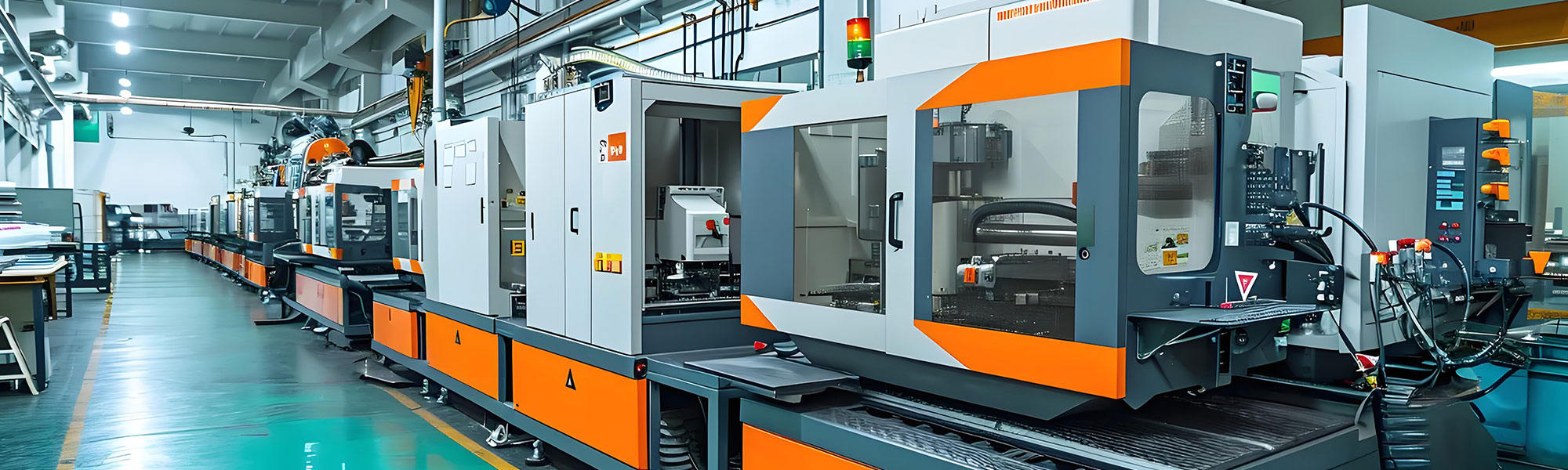
Metal Injection Molding (MIM) combines plastic injection molding's design flexibility with metal's strength to mass-produce small, complex, high-precision metal parts. It suits components weighing 0.1g–100g with complex geometries, tight tolerances, and excellent mechanical properties, achieving >97% theoretical density after sintering.
Metal Injection Molding (MIM) is an advanced manufacturing process that combines the design flexibility of plastic injection molding with the strength and integrity of metal. It enables the mass production of small, complex, high-precision metal parts that would be difficult or impossible to produce using traditional metalworking methods.
MIM is particularly well-suited for producing components weighing between 0.1g and 100g, with complex geometries, tight tolerances, and excellent mechanical properties.
The MIM process consists of four main stages:
Fine metal powder (typically <20 microns) is mixed with a thermoplastic binder system to create a homogeneous feedstock. The binder gives the mixture the flow characteristics needed for injection molding.
The feedstock is heated and injected into a mold cavity under high pressure, similar to plastic injection molding. The result is a "green part" — oversized by about 20% to account for shrinkage during sintering.
The binder is removed from the green part through thermal, catalytic, or solvent-based processes. This leaves a porous "brown part" held together by a small amount of residual binder.
The brown part is heated to temperatures between 1200°C and 1400°C in a controlled atmosphere furnace. The metal particles fuse together, the part shrinks isotropically to its final dimensions, and achieves >97% theoretical density.
| Factor | MIM | CNC Machining | Investment Casting |
|---|---|---|---|
| Part Complexity | Excellent | Limited | Good |
| Production Volume | High (10,000+) | Low-Medium | Medium-High |
| Material Waste | Minimal | High | Medium |
| Surface Finish | Good | Excellent | Good |
| Tooling Cost | Medium-High | Low | Medium |
| Per-Part Cost (High Volume) | Low | High | Medium |
At Ningbo Precision Tech, we specialize in metal injection molding with years of experience serving global customers. We offer end-to-end service from design consultation to mass production, with competitive pricing and strict quality control.
Contact us today to discuss your MIM project requirements.
MIM has four stages: feedstock preparation (metal powder mixed with thermoplastic binder), injection molding into a green part, debinding to remove binder, and sintering at 1200–1400°C to fuse particles and shrink the part to final dimensions.
MIM is best for high production volumes (10,000+), complex geometries, minimal material waste, and low per-part cost at high volume, while CNC offers better surface finish and investment casting suits medium-high volumes.
Common MIM materials include stainless steels (316L, 17-4PH, 420, 440C), low alloy steels (Fe-2Ni, Fe-8Ni, 4605), titanium alloys (Ti-6Al-4V), tungsten alloys, tool steels (M2, D2), and cemented carbide (WC-Co).
 Русский
 Español
 Deutsch
 日本語
日本語