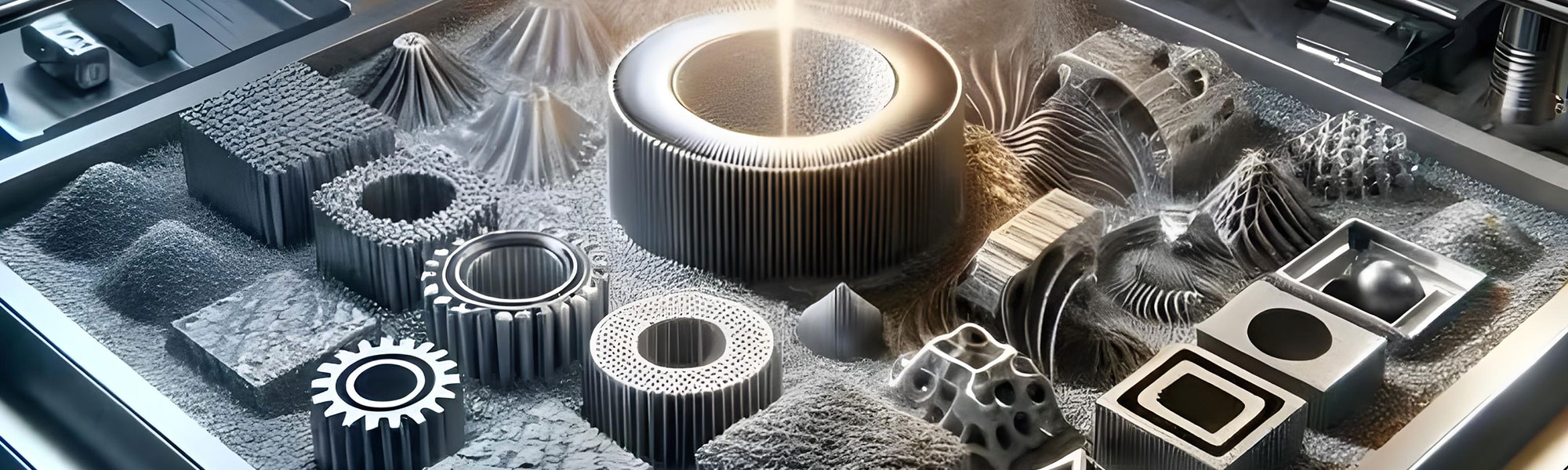
Compared with metal injection molding (MIM), sintering 3D printing cuts prototype development costs to 20% of traditional methods, needs no mold, and delivers samples within days. It handles small-to-medium batches of 100–10,000 units/year, with 100,000+ unit capacity for special structural parts, while matching MIM material performance.
Core Advantages of 3D Printing Technology
Compared to Metal Injection Molding (MIM), sintering 3D printing offers significant advantages:
· Drastic Cost Reduction: Prototype development costs for metal products are 20% of traditional methods
· Agile Development: Early-stage R&D demonstrates superior cost control
No mold required
✓ Eliminate mold development constraints, deliver samples within days |
 |
|
|
Design freedom
✓ Achieve highly complex geometries unattainable by conventional processes |
Customized Production Capacity
|
|
Prototype development costs for metal products are 20% of traditional methods, giving superior early-stage R&D cost control.
No mold is required, which eliminates mold development constraints and allows samples to be delivered within days.
It covers small-to-medium batches of 100–10,000 units per year, with annual capacity of 100,000+ units for special structural parts.
Material performance is comparable to MIM, breaking structural design barriers while enabling highly complex geometries unattainable by conventional processes.
 Русский
 Español
 Deutsch
 日本語
日本語