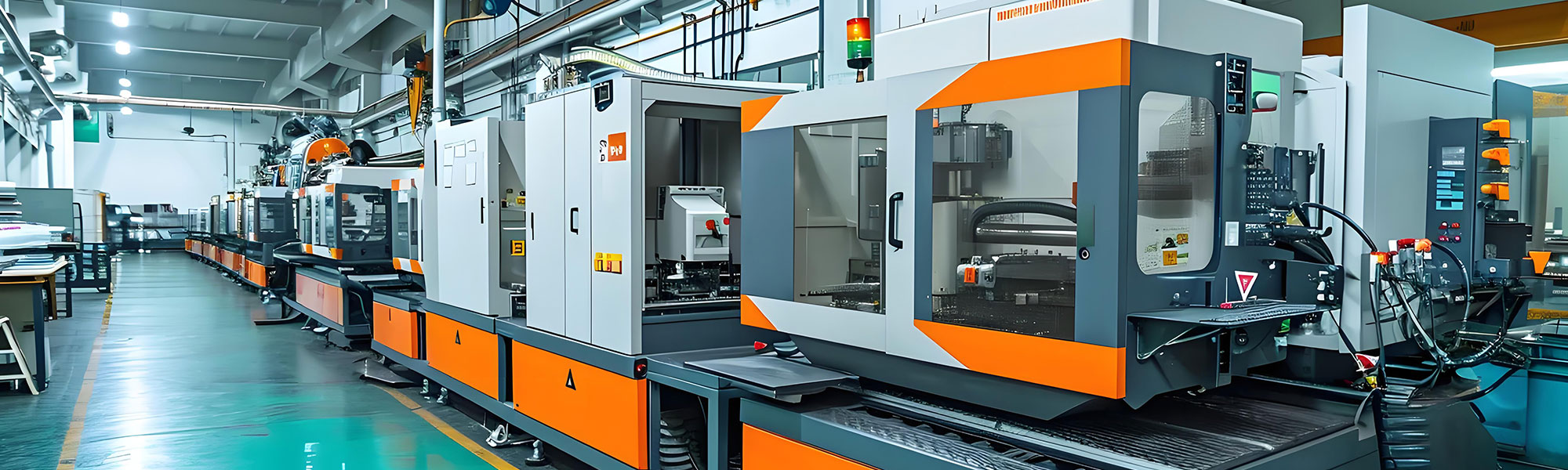
Debinding removes the polymer binder from MIM green parts before sintering via three routes: solvent (dissolves soluble binder in a bath), catalytic (polyacetal binder depolymerised by nitric acid vapour at 110–140°C), or thermal (staged heating). Choice depends on section thickness, volume, material freedom and quality targets.
Metal injection molding begins with a feedstock in which fine metal powder (typically 1–20µm) makes up roughly 55–65% of the volume and a polymer binder carries the rest. That binder is what allows the material to flow into a complex mold cavity. It is also the source of most process risk. Before a part can be sintered, virtually all of the binder must be removed without moving the powder skeleton, cracking the body, or leaving carbon and oxygen behind. How you remove it is a process decision with real consequences for cycle time, dimensional consistency and cost per part.
In solvent debinding, green parts are immersed in a bath (commonly hexane, heptane or a similar hydrocarbon, sometimes water for water-soluble binder systems) held at a controlled temperature. The solvent dissolves the soluble polymer component, typically 40–60% of the binder, opening an open-pore network. That network lets the remaining backbone polymer escape as gas during the subsequent thermal cycle.
Catalytic debinding uses a polyacetal binder that depolymerises in the presence of nitric acid vapour at around 110–140 °C. The reaction is fast and clean, and the removed binder leaves almost no solid residue, which simplifies exhaust handling.
Thermal (or purely thermal) debinding removes the entire binder by staged heating in air, nitrogen, hydrogen or vacuum. It requires no solvent bath and no acid, which keeps the process simple and the waste stream small.
Rather than picking a favourite route, match the debinding method to the part. In practice four questions decide it:
A capable MIM supplier will run more than one route and will tell you which one your part is on. Ask for debinding and sintering parameters in the process control plan, and ask what happens to parts that fail the post-sinter inspection. The answer tells you more about the supplier than any brochure: binder removal is where good MIM parts are made, and where cheap ones quietly fail.
The three routes are solvent debinding, which dissolves the soluble binder fraction in a bath; catalytic debinding, which depolymerises a polyacetal binder using nitric acid vapour at around 110–140°C; and thermal debinding, which removes the entire binder by staged heating.
Thick parts favour catalytic or slow thermal cycles, while thin walls are comfortable in solvent debinding. Catalytic debinding is also noted for excellent repeatability and good performance in thick sections.
Solvent bath times run 2–12 hours depending on section thickness, whereas thermal debinding cycles are much longer, often 10–30 hours.
 Русский
 Español
 Deutsch
 日本語