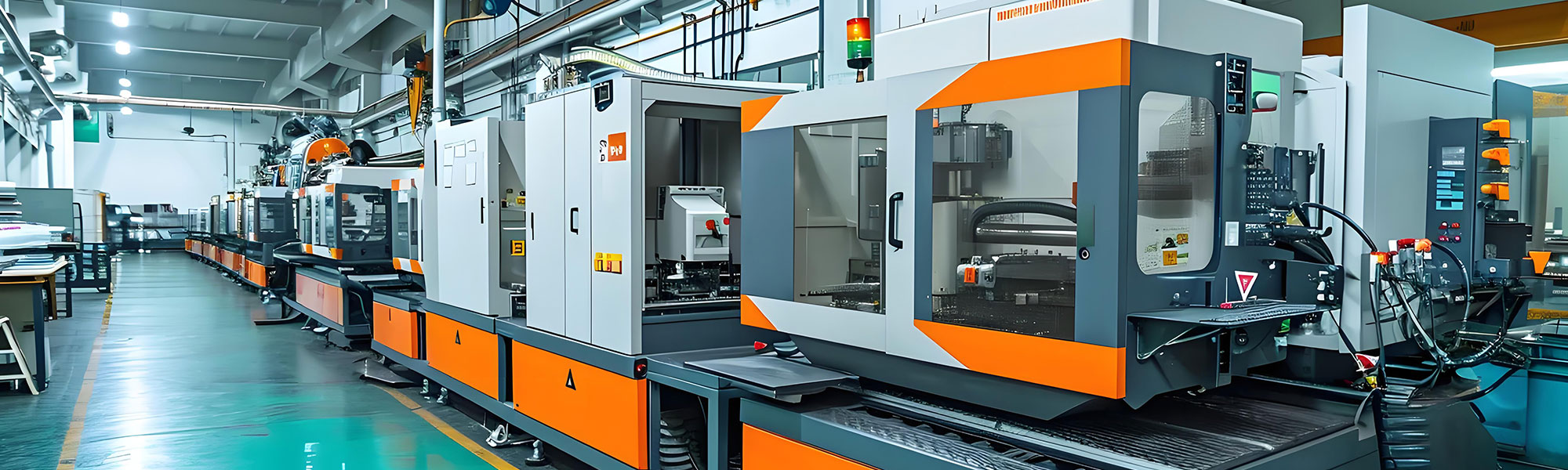
Qualifying a MIM supplier means auditing process control rather than sample quality, because metal injection molding can pass first article yet drift later through shrinkage variation, residual binder, or unvalidated furnaces. An eight-point checklist covers feedstock, tooling, in-house debinding and sintering, Cpk capability, traceability, certification scope, finishing, and engineering response.
In CNC machining, a bad supplier shows up fast: the first article is out of tolerance, you see it on the CMM, and you rework or walk away. In metal injection molding, a weak supplier can pass the first article and still fail six months later — through lot-to-lot shrinkage drift, residual binder, or a furnace that is logged but never validated. The process hides its problems inside the metal, so qualification has to go deeper than a sample report.
Feedstock is where most dimensional variation is born. Ask how incoming powder lots are verified and how feedstock is compounded and stored.
A supplier that cannot discuss gate location, cavity balance and ejection has not solved your part, only quoted it.
Split processes are the largest single source of quality escapes in MIM. When moulding, debinding and sintering happen at different sites, dimensional responsibility becomes a negotiation instead of an engineering task.
Verify furnace type (batch vacuum, continuous pusher, atmosphere), the validated profile for each alloy, and how dew point and oxygen are monitored. For 316L, expect sintered density of 7.7 g/cm³ or better — about 97% of theoretical — with carbon and oxygen inside spec.
Conformance says the sample passed; capability says the process can keep passing.
Every shipped lot should trace back to powder lot, feedstock batch, mould cavity, sintering run and furnace chart. That trail is what lets you contain a problem in days instead of months.
ISO 9001 is the floor; IATF 16949 applies to automotive, ISO 13485 to medical, AS9100 to aerospace. Ask for the certificate scope, not just the PDF — a site can be certified for one product family and not another.
Most MIM parts need post-processing: thread milling, heat treatment, tumbling or plating (see our guide to surface treatment options). Confirm whether these are controlled in-house or handled by approved subcontractors with incoming inspection.
Send a drawing with one deliberate problem in it — an undercut, a wall that is too thin, a tolerance that cannot hold as-sintered. The DFM feedback you get back in three days tells you more than any brochure.
Qualifying a MIM supplier is about verifying process control, not sample quality. Score all eight points, weight the ones that touch your critical dimensions, and visit the plant before releasing volume. A two-hour audit is cheaper than a recall — and far cheaper than a programme that drifts out of tolerance for a year.
For 316L, expect sintered density of 7.7 g/cm³ or better — about 97% of theoretical — with carbon and oxygen inside spec.
±0.3% of dimension is routine as-sintered, while ±0.1% usually requires sizing or machining.
Split processes are the largest single source of quality escapes in MIM, because dimensional responsibility becomes a negotiation instead of an engineering task when moulding, debinding and sintering happen at different sites.
 Русский
 Español
 Deutsch
 日本語