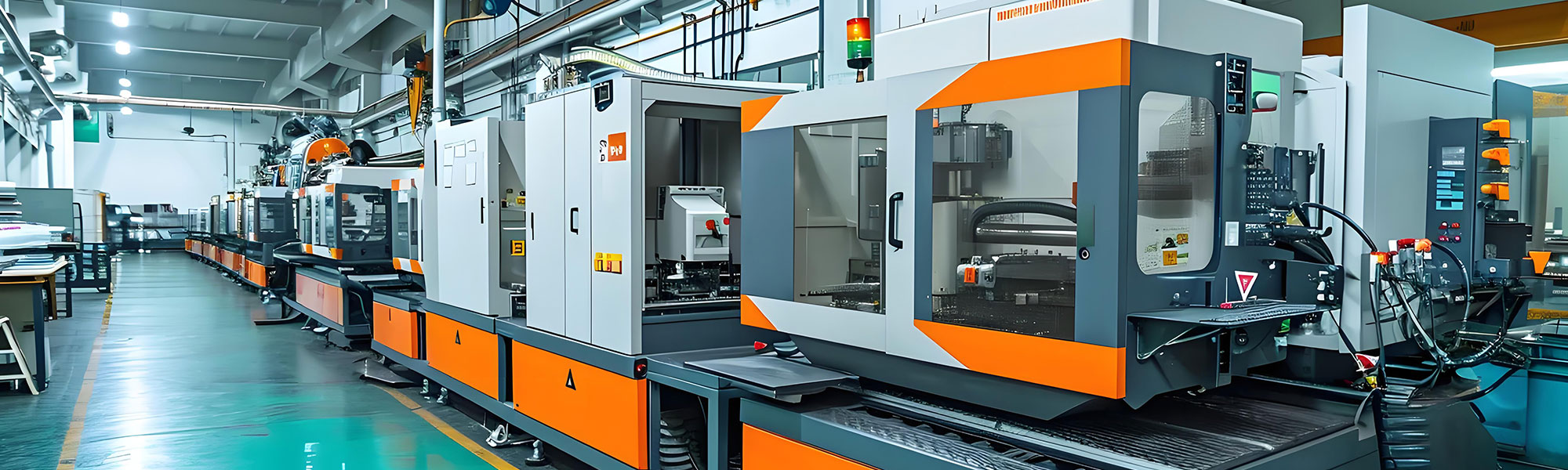
Two-component metal injection molding (2C-MIM) fills two zones of a mold with different metal feedstocks in one cycle, then co-debinds and co-sinters them into a single metallurgically bonded part. It eliminates an assembly step, a joint, and the associated tolerance stack-up.
Two-component metal injection molding (2C-MIM) puts two different metal feedstocks into a single molded part in one production cycle. Instead of molding a component, sintering it, and then joining it to a second part by welding, brazing, or press-fitting, a 2C-MIM tool fills two cavities or two zones of the same cavity with different materials — and the part is co-sintered into one bonded component.
The result is a single piece of hardware that behaves like an assembly. That is the entire commercial case for 2C-MIM: it deletes an assembly step, a joint, and the tolerance stack-up that comes with both.
2C-MIM requires a purpose-built machine with two independent injection units, two barrels, and two sets of process parameters. The most common arrangement is a rotating mold or an indexing plate:
The limiting factor in 2C-MIM is not the molding. It is the furnace. Two materials that shrink at different rates during sintering will either crack at the interface, warp, or delaminate. Practical 2C-MIM programs therefore start with the sintering curve, not the part geometry.
What engineers must match or control:
This is why 2C-MIM material pairs are usually chosen from within one alloy family — 316L with 17-4PH, or low-alloy steel with a tool steel — rather than from opposite ends of the metallurgical spectrum.
2C-MIM tooling is more expensive than single-shot MIM, so the business case has to be volume-led. It pays back fastest in three patterns:
If annual volume is modest, if the two materials cannot share a sintering window, or if the bond line carries high cyclic stress, a conventional single-material MIM part plus a secondary assembly is usually the safer and cheaper route. 2C-MIM is a volume tool, not a prototyping tool — expect dedicated tooling and a longer development cycle before the first qualified parts.
For programs already running single-shot MIM at scale, though, 2C-MIM is one of the few process steps left that can remove cost from a part instead of adding it.
The limiting factor is sintering compatibility, not molding. Materials that shrink at different rates can crack, warp, or delaminate at the interface, so programs start with the sintering curve rather than part geometry.
Pairs are usually chosen from within one alloy family, such as 316L with 17-4PH or low-alloy steel with tool steel, rather than from opposite ends of the metallurgical spectrum.
It is usually not suitable when annual volume is modest, the two materials cannot share a sintering window, or the bond line carries high cyclic stress. In those cases, single-material MIM plus secondary assembly is safer and cheaper.
 Русский
 Español
 Deutsch
 日本語