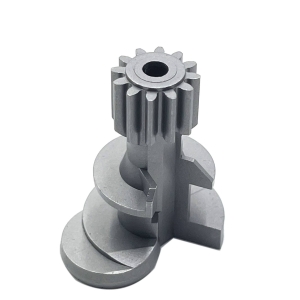
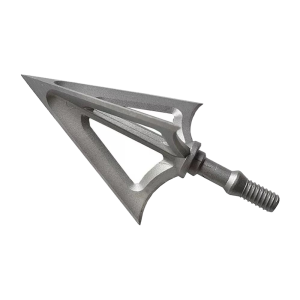
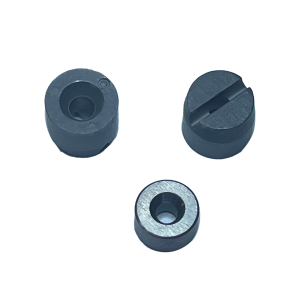
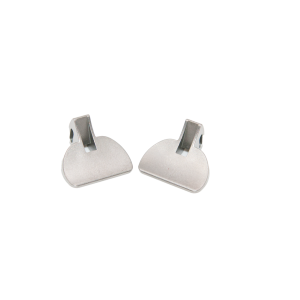
MIM Automotive Slider Components Manufacturer | Precision Vehicle Sliding System Parts
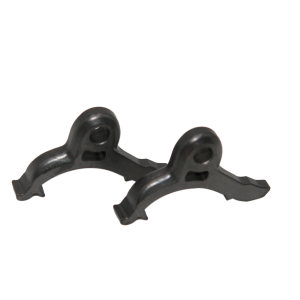
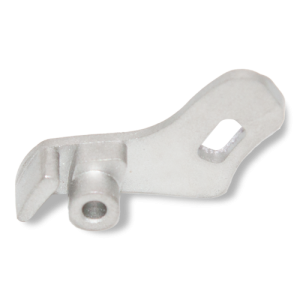
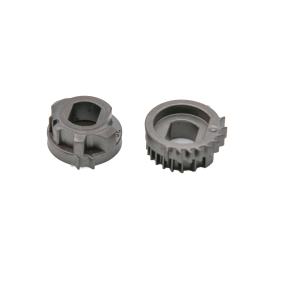
What Are Automotive Slider Components?Automotive slider components are the mechanical elements that enable smooth, controlled linear motion in vehicle systems. They are found wherever a component must move along a defined path with minimal friction and precise guidance — seat adjustment tracks, window regulator channels, sunroof guide rails, sliding door mechanisms, and adjustable pedal assemblies. A single vehicle can contain 10–20 sliding system components, each cycling thousands of times over the vehicle's life. These parts operate in a tough environment: temperature swings from −30°C to +80°C, vibration from road surfaces, dust and moisture ingress, and cyclic loading every time the driver or passenger adjusts a seat, opens a window, or tilts a sunroof. They must maintain smooth operation without lubrication failure, without corrosion, and without dimensional wear — for the life of the vehicle. Metal Injection Molding (MIM)is uniquely suited to automotive slider components. It produces the complex guide profiles, mounting interfaces, and wear surfaces that these parts require — all net-shape, all from a single molding cycle, in materials that handle automotive operating conditions without degradation.
|

|
| Property | 17-4PH MIM (H900) | 4140 Steel MIM (Q&T) | 8620 MIM (Case-Hardened) |
|---|---|---|---|
| Density | ≥ 7.6 g/cm³ | ≥ 7.5 g/cm³ | ≥ 7.5 g/cm³ |
| Hardness | HRC 35–42 | HRC 38–45 | Surface HRC 58–62 |
| Sliding Surface Wear Resistance | ★★★★ | ★★★★ | ★★★★★ |
| Corrosion Resistance | ★★★ | ★★ | ★ |
| Impact Toughness | ★★★★ | ★★★★★ | ★★★★ |
| Best For | All-around slider use | Heavy-load structural sliders | Maximum wear life, high-cycle sliders |
Slider components often feature T-slots, dovetail profiles, or channel geometries that guide a mating part along a linear path. Machining these profiles from solid stock requires broaching or form-tool milling — expensive operations for mid-volume automotive programs. MIM molds the complete guide profile in one shot, including lead-in chamfers and stop features. The as-sintered surface finish (Ra 0.8–1.6µm) provides a smooth running surface without secondary polishing.
A seat track slider might need a mounting flange with bolt holes, a guide channel for the roller bearing, and a stop lug — traditionally three separate pieces welded or bolted together. MIM consolidates all of these into one part, eliminating assembly steps and the associated tolerance stack.
As-sintered Ra 0.8–1.6µm provides a naturally low-friction sliding surface. For automotive slider applications where grease is the standard lubricant, this surface finish is typically sufficient without additional treatment. For dry-running applications, optional micro-polishing or PTFE-impregnated surface treatments are available.
Automotive interiors swing from arctic cold-soak to desert sun. MIM's high density (≥95% theoretical) means the coefficient of thermal expansion matches wrought material — no unexpected dimensional change, no binding in the guide track, no rattling clearance at temperature extremes.
| Application | Location | Material | Key Requirement |
|---|---|---|---|
| Seat track slider | Front/rear seats | 4140 Q&T | Structural strength, 20,000+ cycle life |
| Window regulator guide | Door interior | 17-4PH | Corrosion resistance, smooth operation |
| Sunroof guide rail insert | Roof assembly | 17-4PH | Low friction, UV/heat stability |
| Sliding door roller bracket | Side door | 4140 Q&T | Load-bearing, impact resistance |
| Adjustable pedal slider | Driver footwell | 17-4PH | Tight clearance, consistent feel |
| Center console slider | Interior console | 17-4PH | Detent feel, esthetic finish |
| Headrest adjustment bracket | Seat back | 17-4PH | Ratchet/detent mechanism |
| Feature | Capability |
|---|---|
| Part weight | 2g – 150g |
| Guide profile types | T-slot, dovetail, U-channel, V-guide |
| Slider length | 5mm – 100mm |
| Sliding surface finish (as-sintered) | Ra 0.8–1.6µm |
| Bore tolerance | H7 (±0.01–0.02mm) |
| Guide width tolerance | ±0.03mm (as-sintered) |
| Integrated mounting features | Molded flanges, threaded bosses, snap-fit clips |
| Heat treatment | H900 (17-4PH), Q&T (4140), case-hardening (8620) |
| Parameter | Capability |
|---|---|
| Part weight | 2g – 150g |
| Overall dimensions | Up to 100mm length, 50mm width |
| Wall thickness (minimum) | 0.5mm |
| Guide surface finish | Ra 0.8–1.6µm (as-sintered) |
| Bore tolerance | H7 standard |
| Heat treatment | H900, Q&T, carburizing |
| Surface finish options | As-sintered, bead-blasted, micro-polished, passivated |
| Annual capacity | 20+ million pieces |
| Quality certification | ISO 9001 |
| Inspection | CMM guide profile + optical comparator + 100% function gauge |
Q: What cycle life can MIM slider components achieve?
A: MIM 17-4PH and 4140 sliders are tested to 50,000+ full-travel cycles in automotive seat track applications with grease lubrication. Dry-running applications (window regulator guides) achieve 20,000+ cycles. Actual life depends on load, speed, lubrication, and mating surface — we'll review your specific operating conditions during DFM.
Q: Can you match the precise fit of an existing slider and rail system?
A: Yes. Send us samples or CAD data of your current slider and rail assembly. We reverse-engineer the guide clearance, profile geometry, and mounting interface — and produce MIM equivalents that drop into your existing assembly with identical fit and improved wear characteristics.
Q: What surface finish options are available for sliding surfaces?
A: As-sintered (Ra 0.8–1.6µm) is standard. Micro-polishing achieves Ra 0.2–0.4µm for reduced sliding friction. We can also coordinate PTFE or MoS₂ dry-film lubricant coating through certified partners for applications where grease is not acceptable.
Q: How do MIM sliders compare to stamped or extruded sliders?
A: MIM offers 3D geometry that stamping cannot achieve — undercut guide profiles, integrated bosses, cross-holes. Compared to extrusion, MIM provides higher material strength (17-4PH, 4140 vs. typical 6061/6063 aluminum) and eliminates the cut-to-length and secondary machining that extruded profiles require.
Our MIM process is ISO 9001 certified. Guide dimensions and surface finish are verified on every production batch. Visit Certifications for details.
Designing a new vehicle sliding system or upgrading an existing mechanism? Send us your component specifications for a DFM review and quotation within 48 hours.

 Русский
 Español
 Deutsch
 日本語
日本語