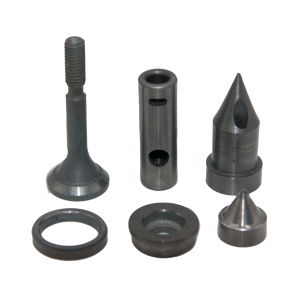
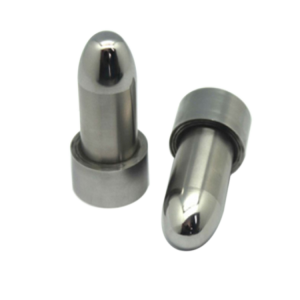
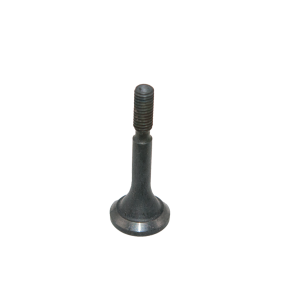
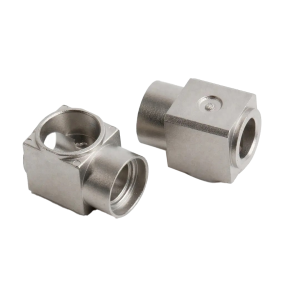
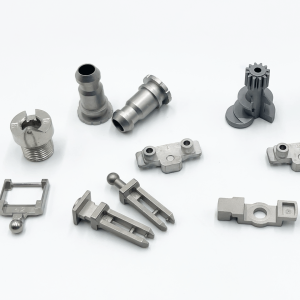
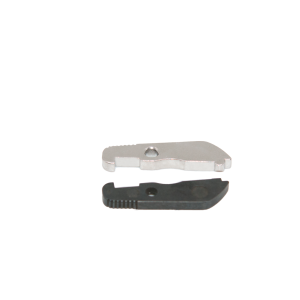
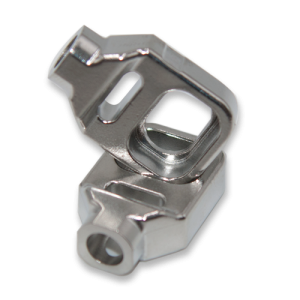
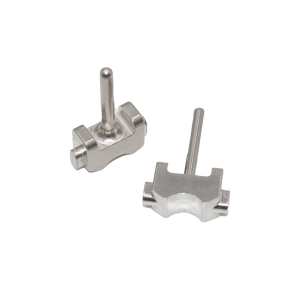
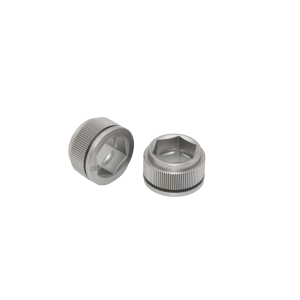
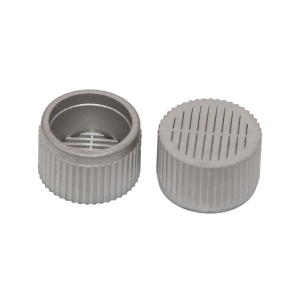
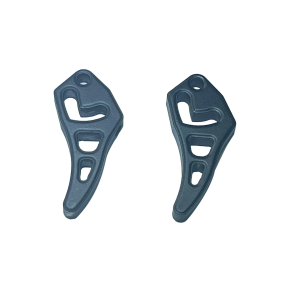
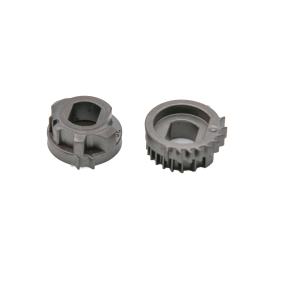
MIM Black Steel Carbide Nozzle Manufacturer | WC-Co Spray & Cutting NozzlesWhat Is a Black Steel Carbide Nozzle?A black steel nozzle is a high-performance wear component manufactured from cemented carbide — a composite of tungsten carbide (WC) particles bonded in a cobalt (Co) matrix. The "black" appearance comes from the carbide surface finish after sintering, and the term distinguishes these industrial-grade nozzles from standard stainless steel or ceramic alternatives. These nozzles serve as the critical orifice in high-pressure jetting systems, abrasive waterjet cutters, spray drying equipment, sandblasting guns, and fuel injection assemblies. Every drop of fluid, every abrasive particle, every high-velocity stream passes through the nozzle bore — which means the nozzle takes the full brunt of erosive wear. When the nozzle wears out, the entire system degrades: spray patterns widen, cutting precision drops, fuel atomization suffers, and maintenance downtime spikes. This is why material choice matters more than geometry — and why cemented carbide has become the gold standard for demanding nozzle applications. |

|
Industrial spray and jet nozzles operate in punishing conditions that eat through conventional materials:
Traditional nozzle materials fail predictably:
| Material | Failure Mode | Typical Lifespan |
|---|---|---|
| Stainless steel | Bore erosion → spray pattern degradation | Weeks to months |
| Ceramic (Al₂O₃) | Brittle fracture under pressure surge | Catastrophic without warning |
| Tool steel | Rapid wear in abrasive flow | Days to weeks |
| Cemented carbide (WC-Co) | Gradual, predictable wear | 5–20× longer than steel |
Cemented carbide winsbecause it combines the extreme hardness of tungsten carbide grains (HRA 85–92, comparable to sapphire) with the fracture toughness of the cobalt binder. The hard WC particles resist abrasion at the bore surface; the cobalt matrix absorbs impact energy and prevents crack propagation. It is, in effect, a material engineered at the microstructure level for erosion resistance.
Cemented carbide nozzles have traditionally been made bypress-and-sinter— compacting WC-Co powder in a hydraulic press, then sintering. This works for simple cylindrical geometries, but falls short when nozzles demand:
Metal Injection Molding (MIM/CIM) solves these geometry constraints.The WC-Co feedstock is injection-molded into near-net shape — capturing complex internal and external features in a single shot — then debound and sintered to full density. The result: a nozzle that combines the wear performance of cemented carbide with the design freedom of injection molding.
Cemented carbide nozzles have traditionally been made bypress-and-sinter— compacting WC-Co powder in a hydraulic press, then sintering. This works for simple cylindrical geometries, but falls short when nozzles demand:
Metal Injection Molding (MIM/CIM) solves these geometry constraints.The WC-Co feedstock is injection-molded into near-net shape — capturing complex internal and external features in a single shot — then debound and sintered to full density. The result: a nozzle that combines the wear performance of cemented carbide with the design freedom of injection molding.
| Property | Typical Value | Relevance to Nozzle Performance |
|---|---|---|
| Hardness | HRA 85–92 | Direct resistance to bore erosion from abrasive flow |
| Transverse Rupture Strength | 2,000–3,500 MPa | Withstands high-pressure surges without fracture |
| Density | 14.0–15.0 g/cm³ | Near-full theoretical density for zero porosity leakage |
| Compressive Strength | 4,000–6,000 MPa | Handles extreme hydraulic pressure at the orifice |
| Fracture Toughness | 8–14 MPa·√m | Prevents catastrophic brittle failure under impact |
| Thermal Conductivity | 60–100 W/m·K | Dissipates heat from high-velocity flow |
| Coefficient of Thermal Expansion | 4.5–6.0 ×10⁻⁶/K | Dimensional stability across hot/cold cycling |
| Grain Size | 0.4–3.0 μm (submicron to medium) | Finer grain = higher hardness; coarser = higher toughness |
Grade selection (WC grain size + Co content) is tuned to your application: finer grain for maximum wear resistance in abrasive jetting; higher cobalt for impact-dominated cutting applications.
Precision-bore carbide orifices for abrasive waterjet systems. Bore diameter tolerances to ±0.005 mm ensure consistent cutting stream coherence — critical for aerospace composites, armor plate, and precision stone cutting where a 0.1 mm stream deviation ruins the cut.
Carbide nozzles for ceramic powder, food ingredient, and pharmaceutical spray drying. The chemical inertness of WC-Co prevents contamination of the dried product, while the wear resistance maintains consistent droplet size distribution over millions of spray cycles.
Large-bore venturi and straight-bore nozzles for abrasive blasting operations. The carbide bore withstands silica sand, aluminum oxide, steel shot, and glass bead media — maintaining bore geometry 5–10× longer than steel nozzles.
Micro-orifice carbide components for diesel and heavy fuel oil injectors. Sub-millimeter bore diameters with precisely controlled entry/exit angles for optimal fuel atomization and combustion efficiency.
Corrosion-resistant carbide grades (WC-Ni or WC-NiCr binder for acidic/alkaline environments) for chemical processing spray systems, desulfurization towers, and industrial coating lines.
Every batch of carbide nozzles undergoes:
Our ISO-certified MIM process delivers the consistency that demanding nozzle applications require. For quality documentation, visit our Quality Assurance page.
Have a nozzle design or wear challenge? Send us your specifications, and we'll evaluate manufacturability.

 Русский
 Español
 Deutsch
 日本語
日本語