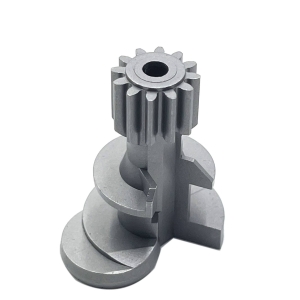
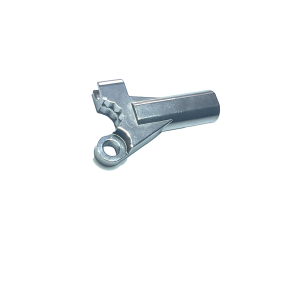
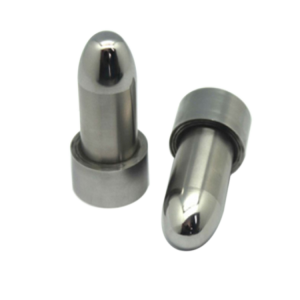
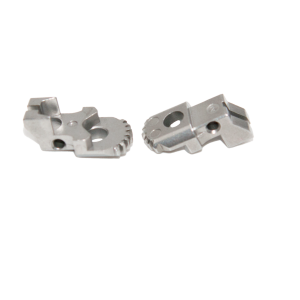
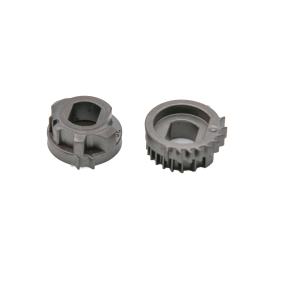
MIM Oil Pump Drive Gear Manufacturer | High-Performance Automotive Oil Pump GearsWhat Is an Oil Pump Drive Gear?The oil pump drive gear is the component that transfers crankshaft rotation to the oil pump — the heart of an engine's lubrication system. It meshes with a mating gear on the crankshaft or an intermediate shaft, driving the pump that circulates pressurized oil through every bearing, journal, and sliding surface in the engine. At redline, this gear can spin at 10,000+ RPM under continuous torque load, bathed in hot engine oil. In high-performance applications — racing engines, sports cars, modified street engines — the oil pump gear faces a brutal operating environment. Sustained high RPM. Oil temperatures exceeding 130°C. Shock loading from aggressive downshifts. A gear failure here is catastrophic: zero oil pressure means a seized engine in seconds. Metal Injection Molding (MIM)produces oil pump drive gears that meet these demands. The gear teeth are molded to net shape with precise involute profiles. Case-hardened 8620 delivers tooth flank hardness of HRC 58–62 — matching or exceeding the performance of machined billet gears — while the ductile core absorbs shock without fracture. All from a single molding cycle, at a cost that makes high-performance metallurgy accessible at production volumes. |

|
| Property | 8620 MIM (Case-Hardened) | 4140 MIM (Q&T) | 17-4PH MIM (H900) |
|---|---|---|---|
| Density | ≥ 7.5 g/cm³ | ≥ 7.5 g/cm³ | ≥ 7.6 g/cm³ |
| Surface Hardness | HRC 58–62 | HRC 38–45 | HRC 35–42 |
| Core Hardness | HRC 30–38 | HRC 38–45 | HRC 35–42 |
| Tooth Bending Fatigue | ★★★★★ | ★★★★ | ★★★ |
| Tooth Contact Fatigue (pitting) | ★★★★★ | ★★★★ | ★★★ |
| Core Toughness (shock) | ★★★★★ | ★★★★ | ★★★ |
| Corrosion Resistance | ★ | ★★ | ★★★ |
| Best For | Maximum gear life, extreme duty | High-strength structural gears | Moderate-duty with corrosion risk |
Why 8620 case-hardened dominates oil pump gears:
8620 is purpose-built for gears. The low-carbon core (0.18–0.23% C) provides exceptional toughness — it yields rather than fractures under shock load. The carburized case (0.6–1.0mm depth) delivers HRC 58–62 on tooth flanks, resisting the rolling/sliding contact fatigue that pits and spalls gear teeth over time. This combination of a hard wear surface and a tough, shock-absorbing core is exactly what an oil pump gear needs to survive 100,000+ kilometers in a high-performance engine.
Cutting involute gear teeth from bar stock requires a specialized gear hobbing machine, a hob cutter matched to the gear module, and significant cycle time per part — especially for helical gears. MIM molds the complete gear — teeth, bore, hub faces, and any lightening pockets — in one shot. Post-sinter gear rolling or honing refines the tooth profile to AGMA Class 9–10 if required. The result: a gear that costs 40–60% less than a machined equivalent at production volumes, with identical metallurgical performance.
Gear noise and oil pressure pulsation often trace back to tooth-to-tooth spacing errors. MIM's mold-based replication holds tooth spacing within microns across every gear in a production run. Smooth mesh means smooth oil pressure delivery — critical for engines with tight bearing clearances.
The metallurgy of MIM 8620 after carburizing is indistinguishable from wrought 8620. The ≥95% density leaves negligible interconnected porosity, so carburizing gas penetrates uniformly. Case depth is verified by microhardness traverse on a cross-sectioned gear from every heat-treat batch. The low-carbon core stays tough — absorbing the shock of aggressive throttle inputs and downshifts without tooth root fracture.
Gear weight matters in a rotating assembly — less inertia means faster throttle response. MIM can mold weight-reduction pockets between the hub bore and the toothed rim, removing mass that serves no structural purpose. A MIM oil pump gear with molded lightening pockets typically weighs 15–25% less than a solid machined gear of the same dimensions.
| Parameter | Capability |
|---|---|
| Gear type | Spur, helical |
| Module | 0.5 – 2.0 |
| Number of teeth | 12 – 60 |
| Outer diameter | 10mm – 60mm |
| Face width | 3mm – 25mm |
| Bore tolerance | H7 (±0.01–0.02mm) |
| Tooth profile accuracy | AGMA Class 8–9 (as-sintered), Class 10 (post-honing) |
| Keyway / spline | Molded or broached post-sinter |
| Case depth (8620) | 0.3–0.8mm |
| Surface hardness | HRC 58–62 (8620), HRC 38–45 (4140) |
| Parameter | Capability |
|---|---|
| Part weight | 5g – 200g |
| Gear OD | 10mm – 60mm |
| Bore tolerance | H7 standard |
| Tooth profile | Involute, AGMA Class 8–10 |
| Heat treatment | Carburizing, carbonitriding, Q&T |
| Case depth (8620) | 0.3–0.8mm |
| Surface finish (as-sintered) | Ra 0.8–1.6µm |
| Secondary operations | Gear rolling, bore honing, keyway broaching, grinding |
| Annual capacity | 10+ million pieces |
| Quality certification | ISO 9001 |
| Inspection | Gear rolling tester (double-flank) + CMM + microhardness traverse |
Q: Can a MIM oil pump gear handle the same torque as a billet steel gear?
A: In a properly designed gearset, yes. MIM 8620 with a carburized case (HRC 58–62, 0.6–1.0mm depth) matches the tooth bending strength and contact fatigue resistance of wrought 8620 gears. We provide gear rating calculations (per AGMA or ISO 6336) with first-article submissions. For extreme-duty racing applications, we recommend an engineering review of your specific torque and RPM profile.
Q: How do MIM gears perform at sustained high RPM?
A: At ≥95% density, MIM gears have negligible interconnected porosity — they behave as a homogeneous material under centrifugal load. MIM 8620 oil pump gears have been successfully tested at 12,000+ RPM continuous operation. Gear mesh dynamics (noise, vibration) at high speed are primarily determined by tooth profile accuracy, which we control through post-sinter gear rolling.
Q: Do you perform gear tooth inspection on every batch?
A: Yes. Every production batch undergoes double-flank gear rolling inspection, measuring total composite error (TCE) and tooth-to-tooth composite error (TTCE). We also perform periodic single-flank inspection and CMM tooth profile audits per the agreed quality plan.
Q: Can you produce oil pump gears with integrated features — a combined gear and shaft or gear with spline?
A: Yes, within size limits. A gear with an integral short shaft, a gear with internal or external splines, or a compound gear (two different tooth counts on one part) can be molded in MIM. Part consolidation eliminates the need to press or weld separate components together.
Q: What is the typical lead time for a custom oil pump gear?
A: Tooling: 4–6 weeks. First-article samples: 1–2 weeks after tool completion. Production ramp after approval: 2–3 weeks. Total: approximately 8–10 weeks. Rush tooling available at a premium.
Q: Can you match an existing OEM or aftermarket gear profile?
A: Yes. Send us a sample gear or the gear data (module/number of teeth/pressure angle/helix angle). We reverse-engineer the tooth profile and mounting geometry, and produce an MIM equivalent — typically at 30–50% cost reduction with identical or improved metallurgical properties.
Our MIM process is ISO 9001 certified. Every heat-treat batch includes a cross-sectioned gear for case depth verification. Visit Certifications for details.
Designing a high-performance oil pump or upgrading an existing engine? Send us your gear specifications or a sample for a DFM review and quotation within 48 hours.

 Русский
 Español
 Deutsch
 日本語
日本語