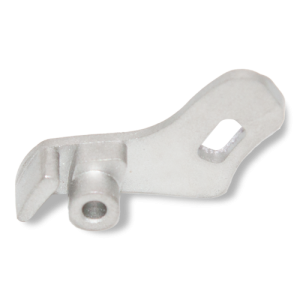
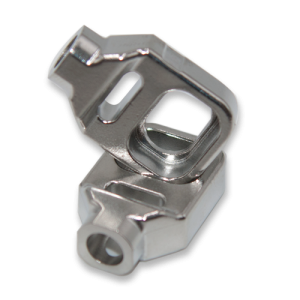
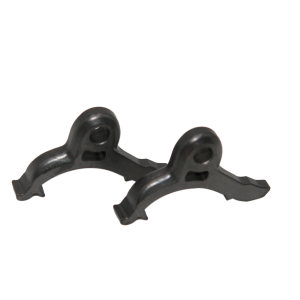
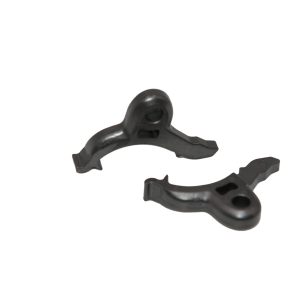
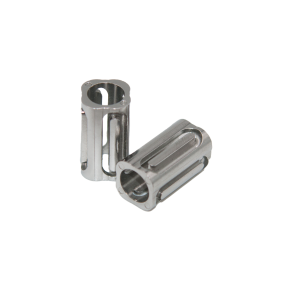
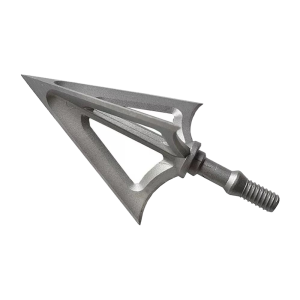
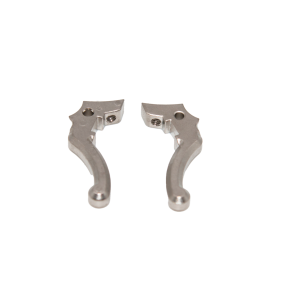
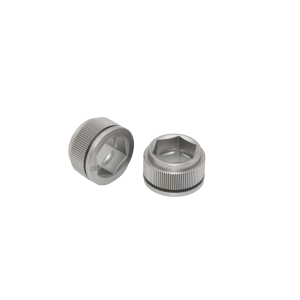
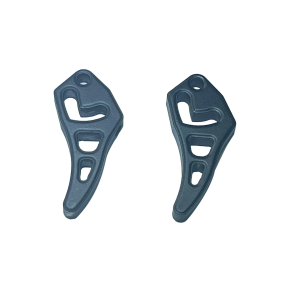
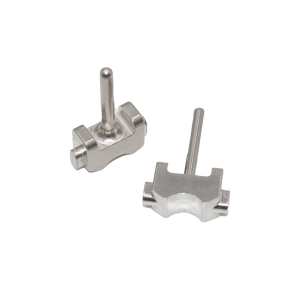
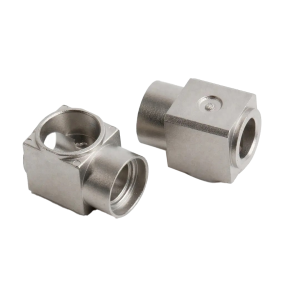
MIM Bicycle Positioning Ratchet Manufacturer | Precision Derailleur Ratchet ComponentsWhat Is a Positioning Ratchet?A positioning ratchet is the indexed, toothed wheel at the heart of a bicycle's shifting mechanism. It works in tandem with a spring-loaded pawl to convert the rider's shift input into discrete, repeatable gear positions. Every click of the shifter rotates the ratchet by a precise angular increment, moving the derailleur cage or internal gear hub to the next gear — and holding it there under chain tension, road vibration, and rider load. When manufactured throughMetal Injection Molding (MIM), a positioning ratchet achieves a combination of properties that traditional manufacturing struggles to deliver: complex directional tooth profiles, precise angular spacing, high surface hardness on tooth flanks, and low weight — all from a single net-shape molding cycle. |

|
| Property | 17-4PH MIM (H900) | 4140 Steel MIM (Q&T) | 8620 (Case-Hardened) |
|---|---|---|---|
| Density | ≥ 7.6 g/cm³ | ≥ 7.5 g/cm³ | ≥ 7.5 g/cm³ |
| Hardness | HRC 35–42 | HRC 38–45 | Surface HRC 58–62 |
| Tooth Wear Resistance | ★★★★ | ★★★★ | ★★★★★ |
| Corrosion Resistance | ★★★ | ★★ | ★ |
| Fatigue Life (cyclic loading) | ★★★★ | ★★★★ | ★★★★★ |
| Weight | Standard | Standard | Standard |
| Best For | All-weather road/gravel bikes | MTB, e-bike — high torque | High-end, maximum tooth life |
A ratchet tooth is not a symmetric triangle — it has an aggressive drive face and a shallow ramp face. The angle difference between the two determines shift feel, holding torque, and release crispness. MIM molds this asymmetric profile directly, achieving the exact tooth geometry the designer specified — no form tool grinding, no wire EDM, no approximation.
If one ratchet tooth is 0.05° out of position, the shift feel changes. If several are out, the rider feels it on every shift. MIM's mold-based replication ensures that all teeth on every ratchet in a production run share the same angular position within ±0.03mm on the pitch circle — delivering the same click at shift 1,000 as at shift 1.
A ratchet's weight matters — especially on high-end road bikes where every gram counts. MIM's design freedom allows weight-saving pockets between the hub bore and the tooth ring to be molded directly, removing mass that serves no structural purpose. The result is a ratchet that weighs 20–30% less than a solid machined equivalent.
The pawl slides over the ratchet ramp face on every shift. As-sintered surface finish of Ra 0.8–1.6µm provides a smooth sliding surface without secondary polishing. For premium applications, post-sinter micro-tumbling reduces this to Ra 0.4–0.8µm, minimizing shift effort and pawl wear.
| Feature | Capability |
|---|---|
| Tooth count | 12 – 60 teeth |
| Outer diameter | 10mm – 50mm |
| Tooth profile | Asymmetric: drive face angle 5°–15°, ramp face angle 30°–60° |
| Angular spacing tolerance | ±0.03mm on pitch circle |
| Bore tolerance | H7 (±0.01–0.02mm) |
| Minimum tooth tip width | 0.4mm |
| Weight-reduction features | Molded pockets, truss structures, hollow hub |
| Surface finish (as-sintered) | Ra 0.8–1.6µm |
| Surface finish (tumbled) | Ra 0.4–0.8µm |
| Application | Bicycle Type | Material | Key Requirement |
|---|---|---|---|
| Derailleur index ratchet | Road, gravel, MTB | 17-4PH | Precise angular spacing, consistent click |
| Internal gear hub ratchet | City, e-bike | 4140 Q&T | High torque holding, impact resistance |
| Freehub ratchet ring | All types | 8620 CH | Maximum tooth life, silent pawl ramp |
| Shifter indexing ring | All types | 17-4PH | Lightweight, tight angular tolerance |
| E-bike torque sensor ratchet | Electric | 17-4PH / 4140 | High cycle fatigue, corrosion resistance |
| Parameter | Capability |
|---|---|
| Part weight | 2g – 80g |
| Tooth count | 12 – 60 |
| OD range | 10mm – 50mm |
| Angular spacing tolerance | ±0.03mm (pitch circle) |
| Bore tolerance | H7 standard |
| Tooth tip width (min) | 0.4mm |
| Heat treatment | H900 (17-4PH), Q&T (4140), case-hardening (8620) |
| Surface finish | As-sintered, micro-tumbled, bead-blasted, passivated |
| Annual capacity | 30+ million pieces |
| Inspection | Optical comparator tooth profile + 100% function gauge |
Q: How many shift cycles can a MIM 17-4PH ratchet withstand?
A: In standard bicycle derailleur applications (road/MTB), MIM 17-4PH H900 ratchets reliably exceed 100,000 shift cycles in testing with no measurable tooth wear when paired with a properly designed pawl. For e-bike applications with higher shift forces, 8620 case-hardened ratchets are recommended.
Q: Can you replicate an existing ratchet design or improve upon it?
A: Yes. Send us a sample or drawing of your current ratchet — we'll reverse-engineer the tooth profile, pitch circle, and bore geometry. Our engineering team can also propose improvements: optimized tooth angles for crisper shifting, weight-reduction pockets, or material upgrades for longer life.
Q: What is the minimum tooth count MIM can produce?
A: MIM can mold ratchets with as few as 12 teeth and as many as 60. The practical limit is driven by the tooth geometry — very fine teeth (tip width below 0.4mm) approach the limit of reliable mold filling and sintering shape retention.
Q: Do MIM ratchets need post-process tooth grinding?
A: For standard bicycle applications, no — the as-sintered tooth profile and surface finish are sufficient. For premium or competition components where shift feel is a brand differentiator, we offer post-sinter micro-tumbling or selective tooth flank polishing to achieve an ultra-smooth pawl interface.
Q: Can you integrate the ratchet with other components — a combined ratchet-and-gear or ratchet-and-shaft?
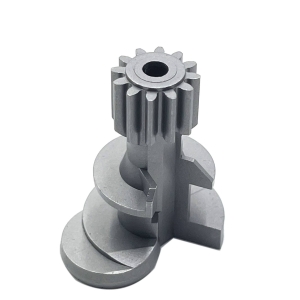
A: Yes, component consolidation is a major MIM advantage. A ratchet with an integrated spur gear on the opposite face, or a ratchet with an integral mounting shaft, eliminates assembly steps and tolerance stack. We'll review your assembly and propose consolidation opportunities during DFM.
Our MIM process is ISO 9001 certified. Tooth profile consistency is verified on every production batch. Visit Certifications for details.
Designing a new shifter or upgrading a drivetrain? Send us your ratchet specifications or current design for a DFM review and quotation within 48 hours.

 Русский
 Español
 Deutsch
 日本語
日本語