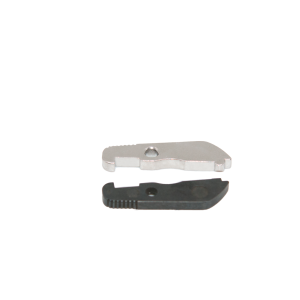
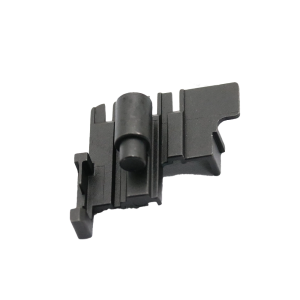
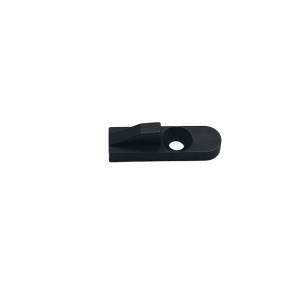
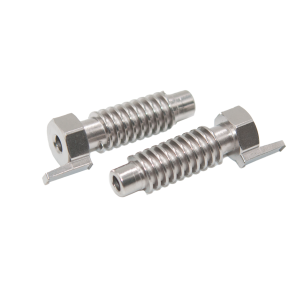
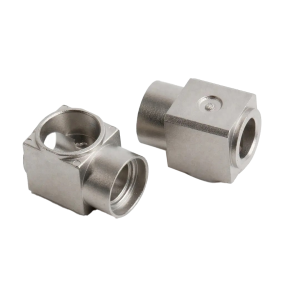
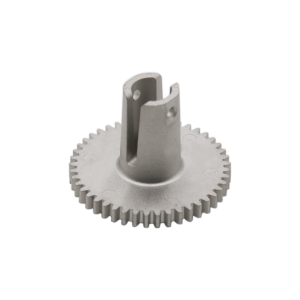
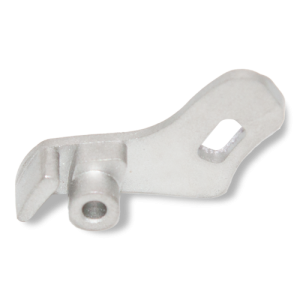
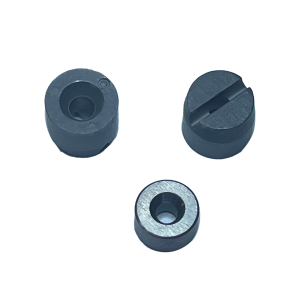
MIM Gun Trigger Manufacturer | Precision Firearm Trigger ComponentsWhat Is a MIM Gun Trigger?A trigger is the interface between the shooter and the firing mechanism — the single component where feel, precision, and reliability converge. A well-designed trigger delivers a clean, predictable break with minimal creep and over-travel. A poorly made one compromises accuracy, safety, and the entire shooting experience. When manufactured throughMetal Injection Molding (MIM), trigger components achieve complex geometries — curved finger pads, sear engagement surfaces, safety notches, over-travel adjustment bosses, and lightening pockets — all in a single net-shape molding. No multi-axis CNC, no wire EDM, no hand-finishing required at production scale. The result is a trigger that feels hand-tuned at a mass-production price point. |

|
| Property | 17-4PH MIM (H900) | 4140 Steel MIM (Q&T) | 316L Stainless MIM |
|---|---|---|---|
| Density | ≥ 7.6 g/cm³ | ≥ 7.5 g/cm³ | ≥ 7.7 g/cm³ |
| Tensile Strength | ≥ 950 MPa | ≥ 1,000 MPa | ≥ 480 MPa |
| Hardness | HRC 35–42 | HRC 38–45 | HRB 65–75 |
| Elongation | 6–10% | 8–12% | 40–50% |
| Sear Surface Wear Resistance | ★★★★ | ★★★★★ | ★★ |
| Corrosion Resistance | ★★★ | ★★ | ★★★★★ |
| Best For | All-around trigger performance | Maximum sear life, match triggers | Marine/humid environments |
A quality trigger's sear surface requires a precise angle, a specific edge break radius, and controlled surface finish — traditionally achieved through CNC milling, grinding, and hand-stoning. MIM molds all this geometry directly, with sear surfaces emerging from the tool at Ra 0.8–1.6µm. Post-sinter lapping on critical engagement surfaces brings it to final spec in seconds, not minutes.
Trigger feel is subjective, but trigger geometry is not. MIM's tool-based replication means the sear angle, contact patch, and pivot hole position are identical across every unit in a production run. The result: a trigger that breaks within a narrow pull-weight window without per-unit hand-fitting.
Curved, serrated, or skeletonized trigger faces that would require 4-axis CNC or casting can be molded directly in MIM. Adding a textured surface pattern, finger-indexing ridge, or adjustable over-travel stop boss adds zero incremental cost.
Skeletonized and pocketed trigger designs remove material where it doesn't carry load — reducing weight while maintaining full strength at the pivot and sear. MIM molds the lightening features directly; CNC would require additional operations.
| Feature | Capability |
|---|---|
| Trigger bow / shoe profile | Curved, flat, skeletonized, serrated |
| Sear engagement surface | Flat or angled, Ra ≤ 0.4µm post-lapping |
| Pivot hole tolerance | H7–H8 (±0.01mm post-sizing) |
| Safety notch | Integrated, no secondary machining |
| Over-travel stop | Molded boss or threaded insert pocket |
| Trigger weight (completed) | 5g – 80g |
| Surface finish (as-sintered) | Ra 0.8–1.6µm |
| Surface finish (post-lapping sear) | Ra 0.2–0.4µm |
From break-barrel springers to PCP match rifles, air gun triggers benefit from MIM's combination of complex geometry and low per-unit cost. Two-stage adjustable triggers with intermediate sear levers are a MIM sweet spot — multiple small, intricate parts produced in family molds.
Drop-in trigger modules for striker-fired and hammer-fired pistols demand tight dimensional control across the trigger, trigger bar, and connector. MIM produces all three components from the same material lot, ensuring consistent hardness and fit.
Mil-spec and enhanced trigger groups for AR-pattern rifles are a classic MIM application. The trigger, hammer, disconnector, and safety selector can all be MIM-produced — often in a single family mold — delivering mil-spec performance at a fraction of billet cost.
Single-stage and two-stage precision rifle triggers require exact sear geometry and a polished engagement surface. MIM's near-net shape reduces the lapping time from minutes to seconds per unit, making high-end trigger feel economically viable at volume.
| Parameter | Capability |
|---|---|
| Part weight | 3g – 80g |
| Wall thickness (minimum) | 0.5mm |
| Pivot hole tolerance | ±0.01mm (post-sizing) |
| Sear surface finish | Ra 0.2–0.4µm (post-lapping) |
| Heat treatment | H900 (17-4PH), quench & temper (4140) |
| Surface finish options | As-sintered, bead-blasted, black oxide, NiB coating, Cerakote-ready |
| Annual capacity | 20+ million trigger components |
| Inspection |
CMM sear geometry audit + 100% function gauge |
Q: How does MIM trigger quality compare to billet or investment cast triggers?
A: MIM triggers sit between billet and casting in both quality and cost. Density ≥97% of theoretical means mechanical properties approach wrought material. Surface finish and dimensional consistency are superior to investment casting. The cost is typically 40–60% lower than billet at production volumes.
Q: Can you match an existing trigger profile from a sample or drawing?
A: Yes. We can reverse-engineer from a physical sample or work from your CAD model. Our engineering team will optimize the design for MIM — adjusting draft angles, gate location, and shrink factors — while preserving the critical sear geometry unchanged.
Q: Do you offer post-process finishing like NiB coating?
A: We offer bead blasting, black oxide, and passivation in-house. For NiB (Nickel Boron), TiN, or Cerakote finishes, we have established partnerships with certified coating houses and can manage the full supply chain for you.
Q: What is the typical lead time from order to first samples?
A: Tooling takes 4–6 weeks. First article samples (T0) ship 1–2 weeks after tool completion. After your approval, production ramp-up takes 2–3 weeks. Total: approximately 8–10 weeks from PO to qualified production parts.
Q: Can you produce modular trigger groups as a complete assembly?
A: Yes. We can MIM-produce all metal components (trigger, hammer, disconnector, sear, safety) and manage assembly, function testing, and pull-weight verification before shipment. This is a growing service for OEMs who want a turnkey trigger module.
Our MIM process is ISO 9001 certified. Heat treatment is performed in-house with full batch traceability. Visit Certifications for details.
Have a trigger design or performance specification? Send us your requirements for a DFM review and quotation within 48 hours.

 Русский
 Español
 Deutsch
 日本語
日本語