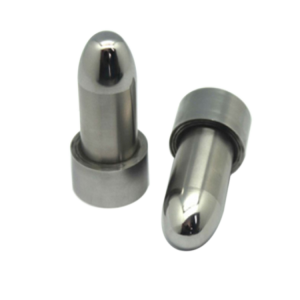
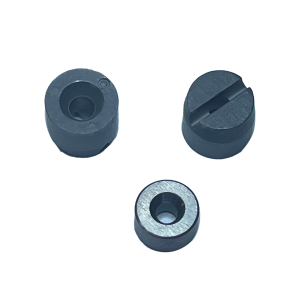
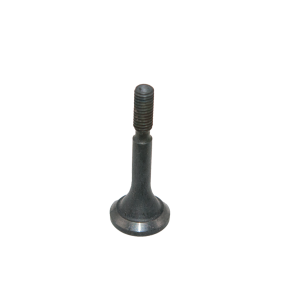
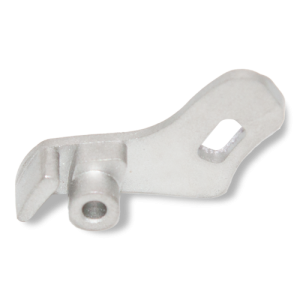
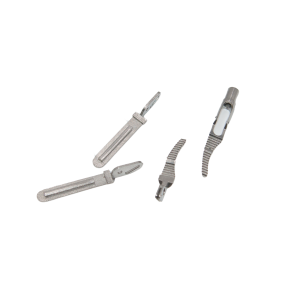
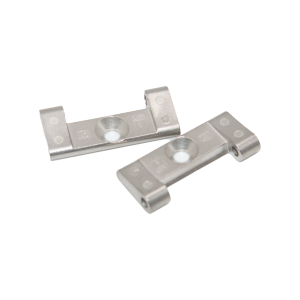
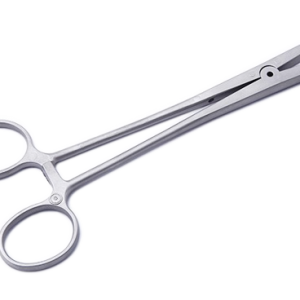
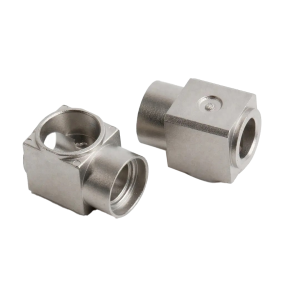
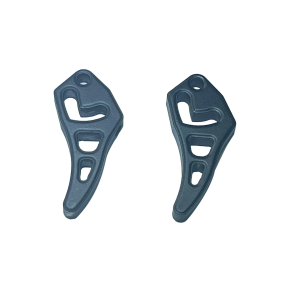
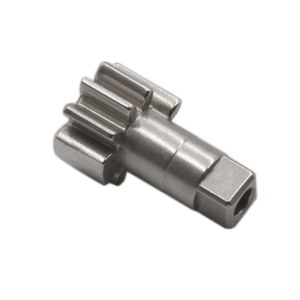
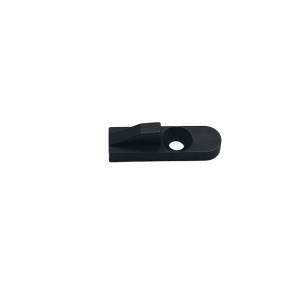
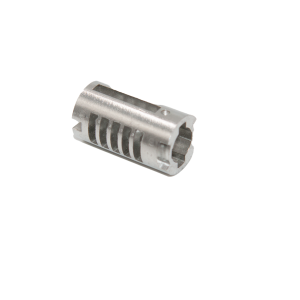
MIM Cemented Carbide Parts Manufacturer | WC-Co Precision Components for IndustryWhat Is Cemented Carbide?Cemented carbide is a composite material engineered for one job above all others: resisting wear. It consists of micron-scale tungsten carbide (WC) particles — the hardest metallic carbide in commercial use — embedded in a ductile metallic binder, typically cobalt (Co), nickel (Ni), or nickel-chromium (NiCr). The WC grains provide hardness (HRA 85–92, on par with sapphire), while the binder phase supplies fracture toughness — preventing the catastrophic brittle failure that plagues pure ceramics. The result is a material that can cut hardened steel, survive abrasive slurries for years, and maintain dimensional precision through conditions that would destroy tool steel in hours. Think of cemented carbide as concrete, but at the microscopic scale: the WC "gravel" takes the load and resists wear, the binder "cement" holds it together and absorbs shock. Adjust the grain size and binder fraction, and you tune the material from ultra-hard (for fine finishing tools) to ultra-tough (for rock drilling). |

|
| Grade | Binder | Hardness (HRA) | TRS (MPa) | Best For |
|---|---|---|---|---|
| WC-6Co | 6% Cobalt | 91–92 | 2,000–2,500 | Precision cutting tools, fine finishing |
| WC-10Co | 10% Cobalt | 89–90 | 2,500–3,200 | Wear parts, general industrial |
| WC-15Co | 15% Cobalt | 87–88 | 2,800–3,500 | Mining tools, impact-heavy applications |
| WC-Ni | 6–10% Nickel | 89–91 | 2,000–2,800 | Corrosion-resistant applications |
| WC-NiCr | 6–10% NiCr | 88–90 | 2,200–3,000 | Chemical processing, seawater exposure |
Submicron grades (0.4–0.8 μm grain) available for all binder types — delivering 5–15% higher hardness at equivalent binder content.
For decades, cemented carbide parts were made one way: press WC-Co powder in a rigid die, eject the "green" compact, and sinter. This works for simple shapes — flat wear plates, cylindrical blanks, basic inserts — but falls apart when parts demand complexity:
MIM/CIM eliminates these constraints.The WC-Co powder is mixed with a thermoplastic binder, injection-molded into a cavity with all features formed in the green state, then thermally debound and sintered. The part shrinks predictably (~18–20% linear) to final dimensions — with internal threads, cross-holes, undercuts, and thin walls all intact.
The economics shift decisivelywhen comparing MIM vs. press-plus-grind for complex cemented carbide parts. A part with three ground surfaces might cost 40–60% less through MIM, because the features are molded in, not ground on.
Indexable inserts, custom form tools, slitting saws, and wear pads for metal cutting operations. MIM allows chipbreaker geometries and coolant channels molded directly into the green body — features that would require expensive EDM or laser machining on a press-and-sinter blank.
Pump seals, valve seats, bearing bushes, guide rollers, wire drawing dies, and shot blast nozzles. Anywhere that abrasive media, high-velocity particles, or metal-to-metal sliding contact eats through conventional materials in weeks.
Drill bit inserts, crusher wear plates, hydrocyclone apex inserts, slurry pump liners, and chute liners. The combination of impact toughness and abrasion resistance makes cemented carbide the backbone of mining wear protection.
Drawing dies, extrusion dies, heading dies, cold forging punches, and can tooling. Cemented carbide tooling extends die life 10–50× over tool steel — and MIM enables conformal cooling channels that further boost productivity.
Gauge blocks, CMM stylus tips, measurement anvils, and calibration standards. The dimensional stability and wear resistance of cemented carbide make it the material of choice for metrology applications where a micron matters.
High-stiffness structural parts for precision machinery, semiconductor equipment, and optical systems. Young's modulus of 500–650 GPa — roughly 3× steel — provides vibration damping and positional accuracy in high-speed automation.
| Parameter | Specification |
|---|---|
| Material system | WC-Co (6%–15% Co), WC-Ni, WC-NiCr |
| Grain sizes | Submicron (0.4–0.8 μm), fine (0.8–1.5 μm), medium (1.5–3.0 μm) |
| Part weight range | 0.5 g – 500 g |
| Dimensional tolerance | ±0.3% of dimension (standard), ±0.1% (precision) |
| Surface finish (as-sintered) | Ra 0.3–0.8 μm |
| Secondary operations | Diamond grinding, EDM, laser marking, PVD/CVD coating |
| Annual capacity |
2,000,000+ pieces |
Our ISO-certified MIM process delivers cemented carbide components with the consistency that demanding industrial applications require. For certification details, visit Quality Assurance.
Have a wear problem or a complex cemented carbide part to produce? Send us your drawing or specifications, and we'll evaluate MIM feasibility.

 Русский
 Español
 Deutsch
 日本語
日本語