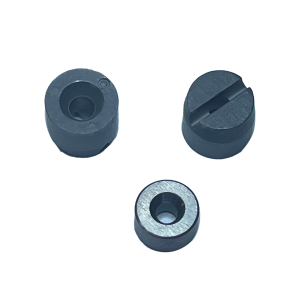
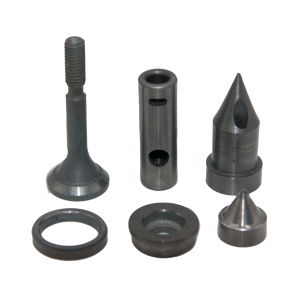
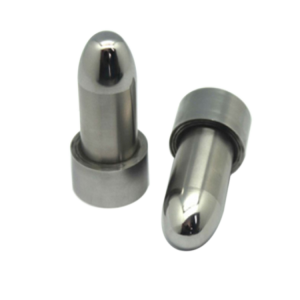
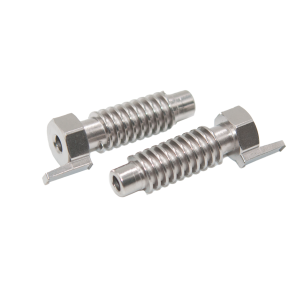
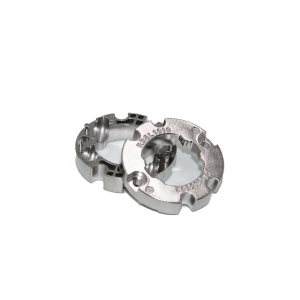
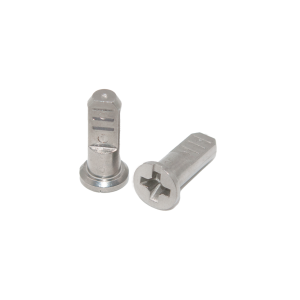
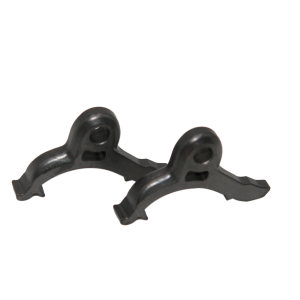
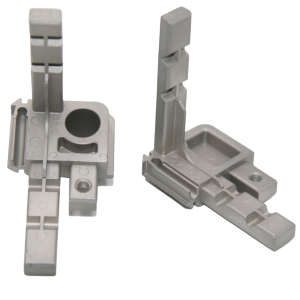
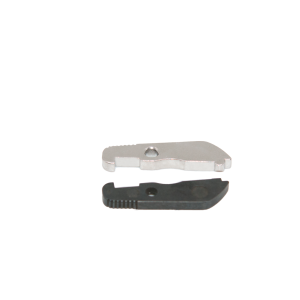
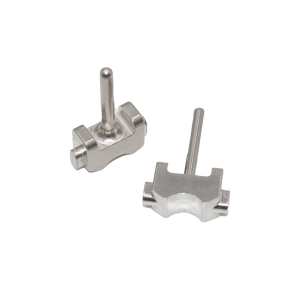
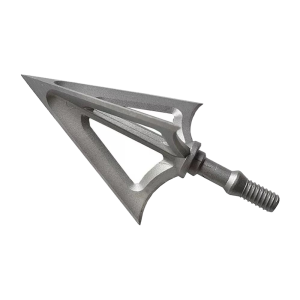
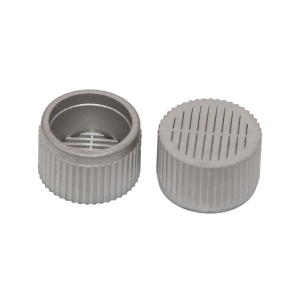
MIM Carbide Threaded Components Manufacturer | WC-Co High-Strength Industrial ConnectorsWhat Are Carbide Threads?Carbide threads are precision-threaded components manufactured from cemented carbide — a composite of tungsten carbide (WC) particles embedded in a metallic binder matrix, typically cobalt (Co). The thread may be external (male screw), internal (female threaded insert), or both, and the component often integrates a hex head, flange, shoulder, or locating feature in a single piece. These threaded fasteners and connectors operate where standard steel threads fail: abrasive slurry valves, high-temperature furnace fixturing, chemical processing couplings, downhole drilling tools, and high-cycle industrial automation where thread galling and wear are the primary failure modes. Traditional threaded components rely on the bulk strength of the material — but in cemented carbide, the story is different. The WC grains at the thread flank surface provide extreme hardness against galling and abrasive wear; the cobalt binder underneath absorbs cyclic loading without brittle fracture. It is a composite designed for the thread root — the highest stress concentration point in any threaded connection. |

|
Steel threads dominate industry for good reason: they are cheap, machinable, and well-understood. But in demanding environments, they fail through predictable mechanisms:
| Failure Mode | Steel Threads | Carbide Threads |
|---|---|---|
| Galling(cold welding under load) | Common — stainless-on-stainless is notorious | Essentially eliminated — WC surface prevents adhesion |
| Abrasive wear(particle-laden environment) | Rapid — thread flanks erode, clearance opens, connection loosens | Minimal — 5–20× longer life |
| Corrosion(acidic/alkaline media) | Pitting → stress corrosion cracking at thread root | WC-Ni/NiCr grades for full chemical resistance |
| Creep/stress relaxation(high temperature) | Softening above 400°C → preload loss | Stable to 600°C+ (WC-Co), 800°C+ (WC-Ni) |
| Thread stripping(overload) | Ductile failure — thread shears off | High compressive strength resists deformation |
The killer application for carbide threads isconnections that must stay tight in abrasive, hot, or chemically aggressive environments— where maintenance access is limited and thread failure means system downtime measured in days, not hours.
Conventional press-and-sinter cemented carbide manufacturing cannot produce threads directly. The rigid die must eject the part axially, which means threads — especially external threads — require post-sintering grinding with diamond wheels. This is slow, expensive, and limited to simple thread profiles.
MIM/CIM changes the game for carbide threads:
The MIM process shrinks the cost gap between "simple carbide blank" and "finished threaded component" — because the thread is already there when the part leaves the furnace.
| Property | Typical Value | Relevance to Threaded Connections |
|---|---|---|
| Hardness | HRA 85–92 | Prevents thread galling and flank wear under cyclic loading |
| Transverse Rupture Strength | 2,000–3,500 MPa | Thread root strength — the highest stress point |
| Compressive Strength | 4,000–6,000 MPa | Resists thread deformation under clamping preload |
| Density | 14.0–15.0 g/cm³ | Zero porosity — no leak paths through the thread |
| Fracture Toughness | 8–14 MPa·√m | Prevents brittle snap at thread root under impact |
| Young's Modulus | 500–650 GPa | High stiffness — maintains preload, resists vibration loosening |
| Thermal Conductivity | 60–100 W/m·K | Heat dissipation in hot-running connections |
| CTE (20–400°C) | 4.5–6.0 ×10⁻⁶/K | Low expansion — dimensional stability in thermal cycling |
| Corrosion Resistance | WC-Co: moderate; WC-Ni: excellent; WC-NiCr: superior | Select binder for your chemical environment |
| Thread Standard | Common Sizes | Typical Application |
|---|---|---|
| ISO Metric (M) | M3–M20 | General industrial, European equipment |
| Unified (UNC/UNF) | #4–3/4" | North American equipment, oil & gas |
| NPT/NPTF (tapered pipe) | 1/8"–1" | High-pressure fluid connections, self-sealing |
| BSPP/BSPT | 1/8"–1" | British/Commonwealth equipment, hydraulics |
| ACME / Trapezoidal | Custom pitch | Leadscrews, valve stems, high-load linear drives |
| Buttress | Custom pitch | Unidirectional high-load connections |
| Multi-start / High-helix | Custom | Fast-thread connectors, quick-release mechanisms |
| Custom profile | Per drawing | Proprietary connections, OEM-specific designs |
Threaded carbide inserts, nozzles, and connectors for MWD/LWD tools, drill bits, and mud motor components. The combination of erosion resistance and thread integrity in high-pressure drilling fluid environments makes carbide the default choice — and MIM makes the threads affordable.
Carbide threaded seats, stems, and cage guides for severe-service control valves handling abrasive slurries. The thread must maintain sealing preload through thermal cycling from ambient to 500°C+ without galling — a perfect match for cemented carbide.
Threaded tungsten carbide posts, clamps, and locating pins for vacuum furnace and sintering furnace setups. Standard steel fasteners soften and creep at sustained temperatures above 800°C — carbide doesn't.
WC-Ni and WC-NiCr threaded connectors for acid handling, chlor-alkali processing, and corrosive fluid transfer. The nickel binder provides corrosion resistance approaching Hastelloy, with hardness no nickel alloy can match.
Carbide threaded wear components for pick-and-place end effectors, welding fixtures, and assembly automation where millions of cycles demand zero-maintenance thread integrity.
Every batch of carbide threaded components undergoes:
Thread failure is not an option in the environments our carbide threads serve. Our ISO-certified MIM process delivers the consistency that critical connections demand. See Quality Assurance for certification details.
Have a threaded connection challenge? Send us your specifications or drawing — we'll evaluate MIM manufacturability.

 Русский
 Español
 Deutsch
 日本語
日本語