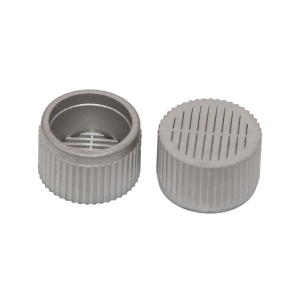
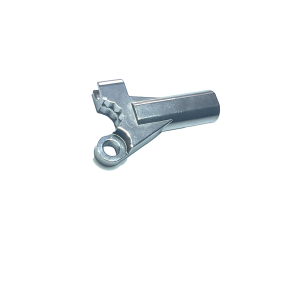
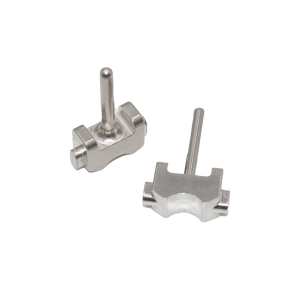
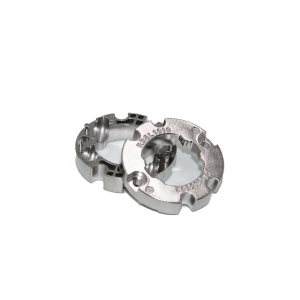
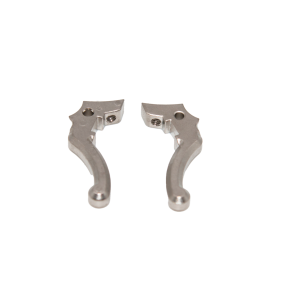
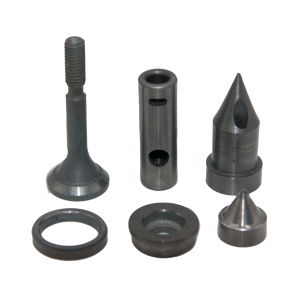
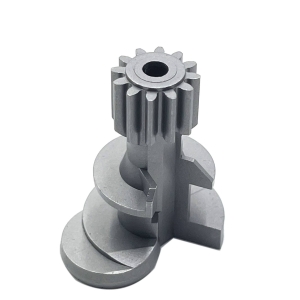
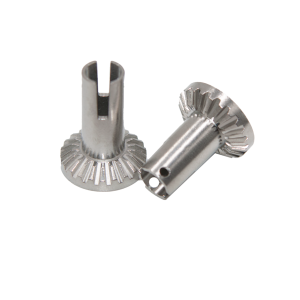
SUS304 Stainless Steel MIM Parts Manufacturer | Precision Complex ComponentsWhat Is SUS304 Metal Injection Molding?SUS304 is the Japanese Industrial Standard (JIS) designation for 18Cr-8Ni austenitic stainless steel — equivalent to AISI 304, EN 1.4301, and Chinese GB 06Cr19Ni10. It is the most widely used stainless steel grade globally, valued for its balanced combination of corrosion resistance, formability, and cost-effectiveness. Through Metal Injection Molding (MIM), SUS304 feedstock is injection-molded into complex near-net-shape geometries, debound, and sintered at high temperature to achieve near-full density. The result: precision stainless steel parts that are impossible or prohibitively expensive to produce through machining, casting, or stamping. Precision-mim specializes in SUS304 MIM parts for industrial applications requiring intricate geometries — multi-cavity housings, thin-walled brackets, fluid path components, sensor mounts, and custom-shaped structural elements that combine multiple features into a single piece. |

|
| Property | Value (MIM SUS304) |
|---|---|
| Density | ≥ 7.6 g/cm³ (≥96% theoretical) |
| Tensile Strength | 480 – 520 MPa |
| Yield Strength (0.2% offset) | 170 – 200 MPa |
| Elongation | 40 – 50% |
| Hardness | HRB 65 – 75 |
| Magnetic Permeability | < 1.02 (non-magnetic after sintering) |
| Surface Finish (as-sintered) | Ra 0.8 – 1.6 µm |
| Max Operating Temperature | ~300°C (continuous) |
SUS304 is austenitic and inherently non-magnetic in its sintered state. Unlike ferritic or martensitic grades, properly sintered SUS304 MIM parts will not attract a magnet — critical for electronics, medical devices, and sensor housings.
Excellent Corrosion Resistance— With 18% chromium content, SUS304 forms a self-healing passive oxide layer that resists oxidation and corrosion in atmospheric, freshwater, and mild chemical environments. For industrial components exposed to humidity, washdown, or outdoor conditions, SUS304 provides long-term reliability without plating or coating.
Superior Ductility for Structural Integrity— At 40–50% elongation after sintering, SUS304 MIM parts absorb mechanical shock and resist brittle fracture far better than higher-strength but low-ductility alternatives like 17-4PH. If your part must yield rather than snap under overload, SUS304 is the safer choice.
Complex Geometry Without Secondary Machining— MIM molds intricate features directly into the green part: internal threads, cross-holes, undercuts, gear teeth, and walls as thin as 0.3mm. SUS304 achieves all this while maintaining full corrosion resistance and ductility — something CNC machining cannot deliver at any cost.
Cost-Effective at Production Volumes— Above 10,000 pieces annually, SUS304 MIM becomes significantly more economical than CNC machining or investment casting. The near-net-shape process eliminates up to 80% of machining waste, and SUS304's high ductility means fewer sintering rejects.
| Criterion | SUS304 | 316L | 17-4PH | Iron-Based |
|---|---|---|---|---|
| Corrosion Resistance | ★★★★ | ★★★★★ | ★★★ | ★★ |
| Strength | ★★★ | ★★★ | ★★★★★ | ★★★★ |
| Ductility (Elongation) | ★★★★★ (40-50%) | ★★★★★ (40-50%) | ★ (5-10%) | ★★ (10-15%) |
| Non-Magnetic | ✅ Yes | ✅ Yes | ❌ No | ❌ No |
| Weldability | ★★★★★ | ★★★★★ | ★★ | ★★★ |
| Relative Cost | ★★★★ (Low) | ★★★ (Medium) | ★★ (Higher) | ★★★★★ (Lowest) |
| Best For | General industrial, food equipment, structural | Marine, medical, chloride exposure | High-strength, wear-resistant parts | Cost-sensitive, non-corrosive |
Rule of thumb:Choose SUS304 when you need the best balance of corrosion resistance, ductility, and cost — and your environment does not involve seawater or chloride exposure (where 316L is preferred) or require heat-treatable high strength (where 17-4PH excels).
Fluid Handling Components— Valve bodies, pump housings, fittings, and flow-meter bodies. SUS304 handles water, oils, and mild chemicals; MIM creates complex internal flow paths impossible to machine as one piece.
Sensor & Instrumentation Housings— The non-magnetic property is essential for electromagnetic sensor enclosures. MIM delivers thin-wall, complex-form housings that shield electronics without interfering with signal readings.
Machinery Structural Brackets— Multi-feature brackets combining mounting flanges, threaded bosses, and alignment pins into a single part, eliminating assembly of 3–5 separate components.
Food Processing Equipment— SUS304 meets FDA requirements for food-contact surfaces. MIM produces sanitary, crevice-free parts for filling machines, conveyor components, and mixing paddles.
Consumer Product Components— Zippers, watch cases, eyeglass hinges, and decorative hardware. MIM's as-sintered Ra 0.8–1.6µm finish often eliminates polishing steps entirely.
| Parameter | Capability |
|---|---|
| Part Weight Range | 0.1g – 150g |
| Min Wall Thickness | 0.3 mm |
| Dimensional Tolerance (as-sintered) | ±0.3% of nominal |
| Tolerance (with secondary op) | ±0.1% |
| Annual Production Capacity | 50+ million pieces |
| Surface Treatments | Electropolishing, passivation, PVD coating, bead blasting |
| Secondary Operations | CNC finishing, tapping, grinding, laser marking |
Q: Is SUS304 MIM as strong as wrought SUS304 bar stock?
A: MIM SUS304 achieves ≥96% of theoretical density, with tensile and yield values within 5–10% of wrought material. For most industrial applications, this difference is negligible. The trade-off — complex geometry at significantly lower cost — is almost always worth it.
Q: Why is non-magnetic property important for my part?
A: Industrial sensors, medical instruments, and electronic devices often rely on electromagnetic principles. A magnetic housing would distort readings. Properly sintered SUS304 is reliably non-magnetic (permeability <1.02). Note: cold-worked 304 can become slightly magnetic due to strain-induced martensite.
Q: What surface finish can I expect without secondary polishing?
A: As-sintered SUS304 MIM parts typically achieve Ra 0.8–1.6µm, comparable to a fine machined finish. For cosmetic or sanitary applications, electropolishing brings this down to Ra <0.4µm.
Q: Can you produce parts with internal threads?
A: External threads can be molded directly. Internal threads typically require secondary tapping due to core-pin extraction limitations. We handle both processes in-house.
Q: What is the minimum order quantity?
A: Prototyping runs as low as 500–1,000 pieces. For full production, 10,000+ pieces annually is where MIM's cost advantage over CNC machining becomes decisive.
 Русский
 Español
 Deutsch
 日本語
日本語