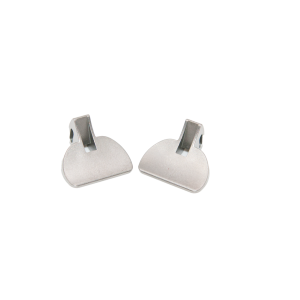
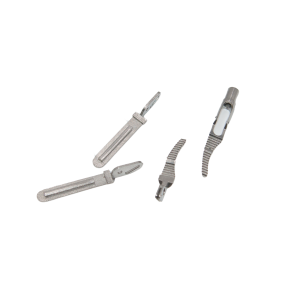
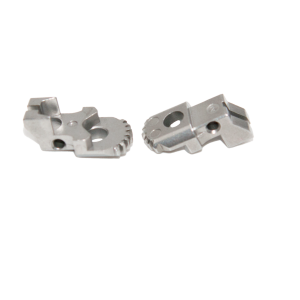
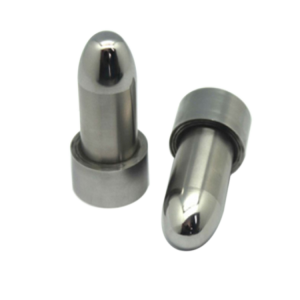
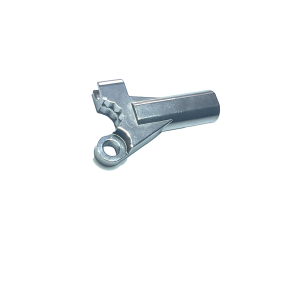
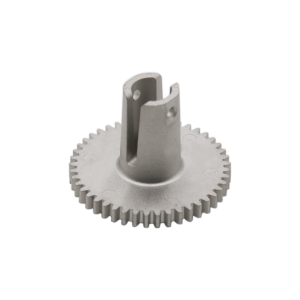
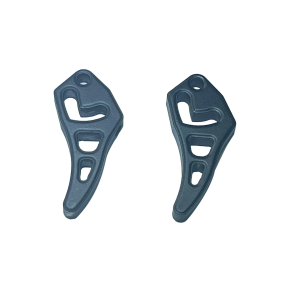
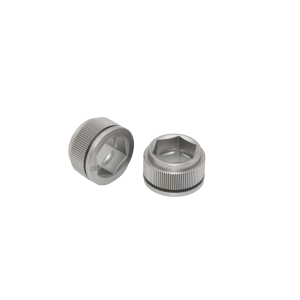
MIM Hemostatic Forceps Components | Precision Stainless Steel Surgical ClampsWhat Are Hemostatic Tongs?Hemostatic forceps — also called hemostatic tongs, artery forceps, or hemostats — are the surgeon's primary tool for controlling bleeding. They clamp blood vessels to stop flow, hold tissue during dissection, and grasp suture needles during closure. In a typical abdominal surgery, a surgeon may use hemostats 50–100 times — and every clamp must engage reliably, lock securely, and release smoothly. The instrument's function depends on three precision interfaces: the jaw serration pattern (grip without slipping), the box lock (pivot with zero lateral play), and the ratchet lock (hold clamping force without creep). All three are traditionally produced through separate manufacturing steps — forging, milling, filing, heat treating — each introducing variability. MIM produces all three interfaces in a single molding operation, with the material properties to survive thousands of autoclave sterilization cycles without degradation. |

|
Each anatomical zone has distinct MIM advantages:
The finest part of the instrument. Transverse and longitudinal serrations molded in — no hand filing. Tip geometry (straight, curved, angled) molded to the surgeon's preference. Halsted mosquito tips as fine as 0.3 mm.
The precision pivot. Male and female box lock halves are molded separately with interlocking geometry. As-sintered clearance of 0.03–0.05 mm between the pin and bore — smooth pivot action out of the furnace, minimal post-sinter lapping.
The self-locking mechanism. Molded ratchet teeth on the handle ring shanks engage progressively through 3 positions. Tooth profile is identical piece-to-piece — every pair locks with the same feel.
| Pattern | Jaw Length | Serration | Primary Use |
|---|---|---|---|
| Halsted Mosquito | 12–15 mm | Full transverse | Fine vessel clamping, pediatric, plastic surgery |
| Kelly | 25–30 mm | 1/2 transverse | Medium vessel clamping, general surgery |
| Crile | 25–35 mm | Full transverse | Large vessel clamping |
| Rochester-Pean | 35–50 mm | Full transverse + longitudinal | Heavy tissue, large vessel pedicles |
| Rochester-Carmalt | 45–60 mm | Longitudinal only | Tube clamping, hysterectomy |
| Right Angle (Mixter) | 20–25 mm | Smooth or fine serration | Dissection around vessels, passing ligatures |
| Material | Grade | Hardness | Best For |
|---|---|---|---|
| 316L | ASTM F138 | HRB 75–85 | General hemostats, maximum corrosion resistance |
| 17-4PH H900 | ASTM A564 | HRC 40–45 | High-use instruments, premium feel and longevity |
| 420 stainless | ASTM F899 | HRC 48–54 | Cutting hemostats, scissors-action variants |
| Property | 316L | 17-4PH H900 |
|---|---|---|
| Tensile Strength | 520 MPa | 1,310 MPa |
| Yield Strength | 210 MPa | 1,170 MPa |
| Hardness | HRB 75–85 | HRC 40–45 |
| Density | ≥7.85 g/cm³ | ≥7.65 g/cm³ |
| Autoclavable (134°C) | Yes | Yes |
| Magnetic | No | Yes |
A hemostat that slips costs more than blood — it costs the surgeon's trust. Our ISO-certified MIM process delivers instruments that perform when it matters most. See Quality Assurance for certifications.
Developing a new line of surgical hemostatic forceps? Send us your instrument specifications — we'll evaluate MIM manufacturing and provide a prototype timeline.

 Русский
 Español
 Deutsch
 日本語
日本語