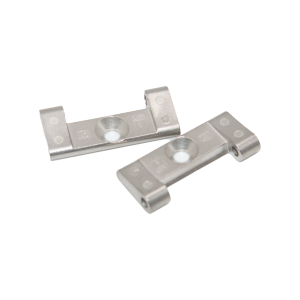
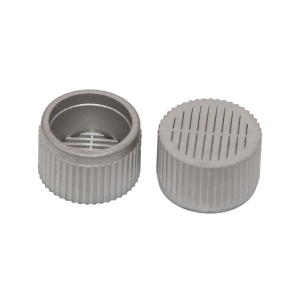
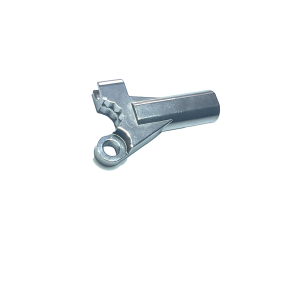
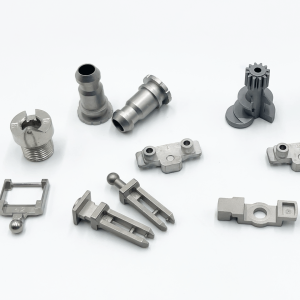
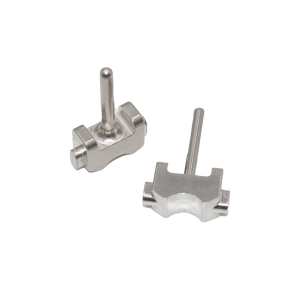
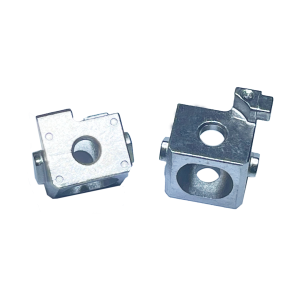
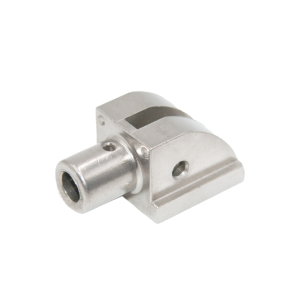
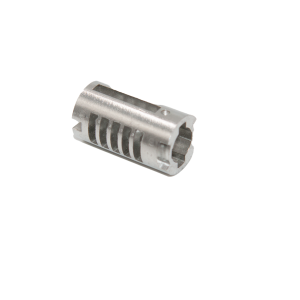
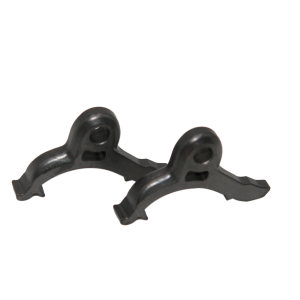
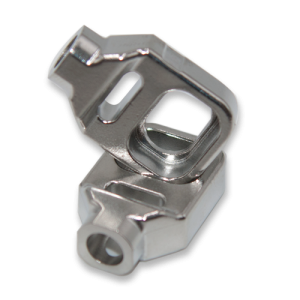
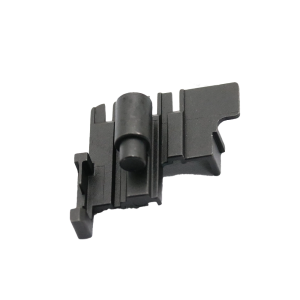
MIM Anti-Loosening Lock Washer Assembly | Precision Retaining Ring Components RBSL1616What Is an Anti-Loosening Lock Washer Assembly?This is a two-piece interlocking ring assembly — a precision-engineered locking mechanism designed to prevent loosening under high-speed rotation, vibration, and thermal cycling. The assembly consists of two matched circular ring components:
When assembled, the two rings interlock — the locating pins seat into the matching grooves, creating a positive mechanical lock that prevents relative rotation between the two components. The surface is stamped with model identification codes such as RBSL1616, enabling traceability during assembly and maintenance. |

|
Ideal for motorcycle clutch repair kits, precision ball screws/spline shafts, and vehicle transmission systems.
A functional interlocking ring assembly requires pin-to-groove positional accuracy (even 0.1 mm error causes binding), consistent pin diameter and groove width, complex internal tooth geometry, and surface hardness to resist fretting wear. MIM produces both rings from matched tooling — pin positions on one cavity correspond exactly to groove positions on the mating cavity.
| Property | Value (MIM SS304) | Relevance |
|---|---|---|
| Density | ≥ 7.6 g/cm³ | Full-strength locking security |
| Tensile Strength | 480 – 520 MPa | Locating pins resist shear forces |
| Hardness | HRB 65 – 75 | Groove surfaces resist fretting and wear |
| Yield Strength | 170 – 200 MPa | Ring maintains spring-back for assembly preload |
| Elongation | 40 – 50% | Ductility prevents brittle pin fracture under shock load |
| Corrosion Resistance | Passes 48h salt spray (ASTM B117) | Reliable in transmission fluid and outdoor environments |
| Dimensional Tolerance | ±0.3% of nominal | Guaranteed pin-to-groove alignment |
| Criterion | MIM SS304 | Stamped Steel + Machined | CNC Machined (2-Piece) | Investment Cast |
|---|---|---|---|---|
| Pin-to-groove alignment | ★★★★★ | ★★ | ★★★ | ★★★ |
| Internal tooth geometry | ★★★★★ | ★ | ★★★ | ★★★ |
| Matched-pair consistency | ★★★★★ | ★★ | ★★★ | ★★ |
| Unit cost @ 5k+ volume | ★★★★★ | ★★★ | ★ | ★★ |
| Surface finish (as-produced) | ★★★★ | ★★★ | ★★★★★ | ★★★ |
| Model code integration | ★★★★★ (molded in) | ★★★ (stamped/laser) | ★★★★ | ★★★ |
| Parameter | Capability |
|---|---|
| Material | SS304; 316L and 17-4PH available |
| Ring OD range | 10 mm – 80 mm |
| Pin diameter tolerance | ±0.02 mm |
| Groove width tolerance | ±0.03 mm |
| Pin-to-groove positional accuracy | ±0.05 mm |
| Minimum wall thickness | 0.4 mm |
| Surface hardness | HRB 65 – 75 (as-sintered); 17-4PH to 40+ HRC |
| Surface marking | Molded-in model codes, logos, or batch numbers |
| Matched-pair verification | 100% functional engagement test |
| Annual capacity | 50+ million pieces |
Q: How do you ensure that every ring pair will assemble correctly in the field?
A: We perform 100% functional engagement testing on matched pairs before shipment. Each ring pair is test-assembled and verified for proper pin-to-groove engagement.
Q: Can the interlocking geometry be customized for different torque or vibration specifications?
A: Yes. Locking security is determined by: number of locating pins, pin diameter/groove depth, and pin angular distribution. We optimize based on your specific torque and vibration profile.
Q: What materials are available beyond SS304 for higher-strength requirements?
A: 17-4PH (heat-treatable to 40+ HRC, 1,100+ MPa after H900) and 440C (hardenable to 55+ HRC). Titanium alloys (Ti-6Al-4V) also available.
Q: Can you produce ring assemblies with integrated spline or gear teeth?
A: Yes. Internal/external spline profiles, involute gear teeth, and keyway features molded directly into the ring body — combining locking and power-transmission functions in one component.
Q: What surface treatments are available for the marking area to enhance code readability?
A: Laser dark-annealing (high-contrast dark mark), pad printing (colored markings), or contrast paint fill on molded-in code relief for permanent visibility.
Learn more about our MIM process for precision mechanical components and material options.
Have a retaining ring or lock washer specification? Send us your drawing for a DFM review and matched-pair feasibility assessment.

 Русский
 Español
 Deutsch
 日本語
日本語