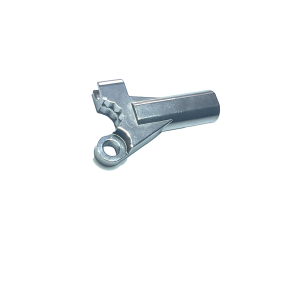
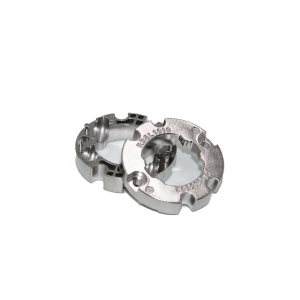
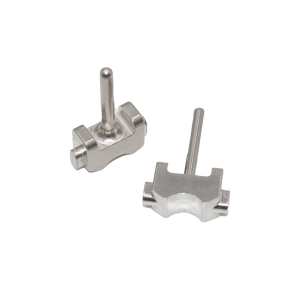
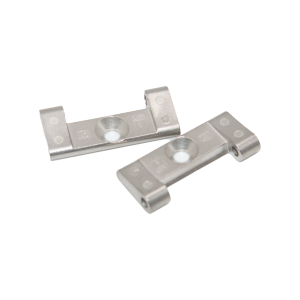
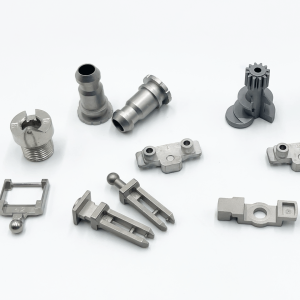
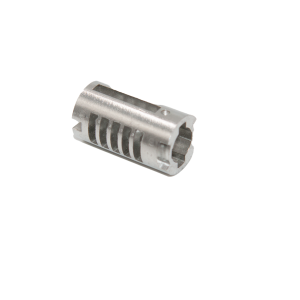
MIM Sintered Metal Filter Parts | Porous Stainless Steel Filtration ComponentsWhat Are MIM Metal Filter Parts?Metal filter parts produced through Metal Injection Molding are precision porous components used for fluid and gas filtration, flow control, noise reduction, and powder fluidization. Unlike conventional machined or stamped filters, MIM sintered filters achievecontrolled, uniform porosity throughout the entire part— not just on the surface. The MIM process allows the integration of filter media directly into complex-shaped functional components: a single part can serve as both a structural housing and a filtration element. This eliminates assembly steps, reduces leak points, and enables geometries impossible with traditional powder compaction. Precision-mim manufactures custom porous metal filters in austenitic stainless steels (316L, 304) to customer-specified pore sizes, shapes, and flow characteristics. |

|
The filtration mechanism in MIM sintered metal filters operates on three levels:
The key advantage of sintered metal over polymer or fabric filters:pore size is controlled at the powder level. By selecting metal powder particle size distribution and adjusting sintering parameters, we achieve predictable filtration ratings from sub-micron to 100+ microns — and the pore structure remains stable under conditions that would degrade organic media.
| Material | Corrosion Resistance | Max Operating Temp | Best For |
|---|---|---|---|
| 316L Stainless Steel | ★★★★★ (excellent, incl. chloride) | ~450°C | Chemical processing, marine, pharmaceutical |
| 304 Stainless Steel | ★★★★ (good, except chloride) | ~300°C | Food processing, general industrial, water filtration |
| 17-4PH Stainless Steel | ★★★ | ~300°C | High-pressure applications requiring strength |
For most filtration applications,316L is the recommended choicedue to its molybdenum content providing superior pitting and crevice corrosion resistance — critical when the filter is exposed to aggressive cleaning chemicals or process fluids.
Unlike wire mesh where pore size is determined by weave geometry, MIM sintered filters achieve porosity through powder particle bonding. This produces a three-dimensional, interconnected pore network with highly consistent filtration characteristics across the entire part.
Sintered metal filters withstand pressure differentials up to several hundred bar depending on wall thickness. They do not collapse, tear, or degrade under flow surges that would destroy polymer or ceramic filter elements.
Stainless steel filters operate continuously at 300–450°C and tolerate steam sterilization, aggressive CIP (clean-in-place) chemicals, and solvent exposure. No polymer filter can match this envelope.
Unlike disposable filter cartridges, sintered metal filters can be backflushed, ultrasonically cleaned, or chemically regenerated. In many applications, the filter element lasts the lifetime of the equipment — dramatically reducing consumable costs.
MIM's design freedom means filter elements can incorporate mounting flanges, threaded connections, and alignment features directly into the sintered part. No welding, brazing, or adhesive bonding required.
| Sector | Applications |
|---|---|
| Chemical & Petrochemical | Catalyst, polymer, and solvent filtration. 316L at elevated temps where Hastelloy would be cost-prohibitive |
| Food & Beverage | Steam-sterilizable filter elements for dairy, brewing, beverage filling. 304/316L meets FDA food contact |
| Pharmaceutical | Sterile process gas filtration, solvent purification, API recovery. Zero fiber shedding in GMP environments |
| Automotive & Engine | Oil filtration, fuel system filters, exhaust gas, airbag inflator diffusers |
| Pneumatics & Fluid Power | Mufflers, silencers, flow restrictors. Withstands impact loads that shatter sintered bronze |
| Industrial Water Treatment | RO pre-filtration, wastewater sampling, aeration spargers. Backflushable, low TCO |
| Parameter | Capability |
|---|---|
| Material | 316L, 304 stainless steel |
| Filtration rating | 0.5 – 100 µm |
| Porosity range | 25 – 60% |
| Part geometry | Discs, tubes, cups, bushings, custom shapes |
| Max part dimensions | Ø150mm × 200mm length |
| Wall thickness (minimum) | 0.5 mm |
| Operating pressure | Up to 300 bar (geometry-dependent) |
| Operating temperature | 316L: ≤450°C / 304: ≤300°C |
| Surface treatments | Passivation, electropolishing |
Q: How do you control pore size?
A: Via three process variables: starting powder particle size distribution, binder formulation ratio, and sintering time/temperature profile. Validated per batch with bubble-point testing per ISO 4003.
Q: Can you do graded porosity?
A: Yes. Co-injection of two feedstocks or green-layer lamination before sintering creates asymmetric pore structures for depth filtration.
Q: How are sintered metal filters cleaned?
A: Backflushing (most common), ultrasonic cleaning, chemical cleaning, or thermal regeneration (400–500°C burn-off). We provide cleaning recommendations with every order.
Q: MIM sintered vs. wire mesh filters?
A: Wire mesh = 2D surface filter, cheaper but limited dirt capacity and edge fraying. MIM = 3D monolithic structure with depth filtration, higher strength, no fraying. Choose MIM when reliability matters more than upfront cost.
Q: Do you provide flow-rate vs. pressure-drop curves?
A: Yes — experimentally validated for production orders, estimated for prototypes.

 Русский
 Español
 Deutsch
 日本語
日本語