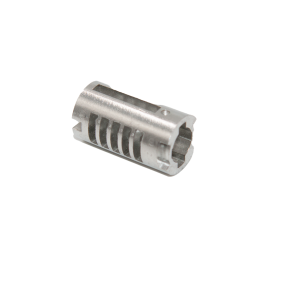
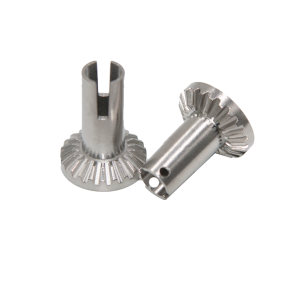
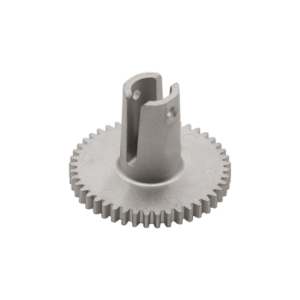
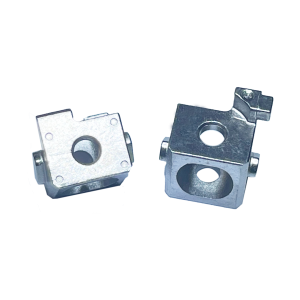
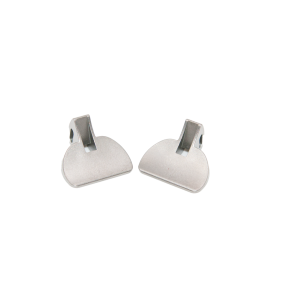
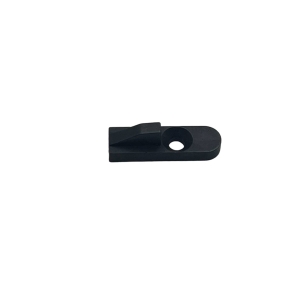
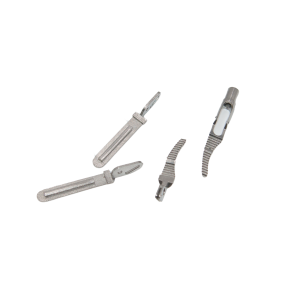
MIM Stainless Steel Smart Lock Deadbolt Mechanism | Precision Lock Tongue ComponentThis MIM stainless steel smart lock deadbolt is a precision lock tongue component, typically made from SUS304, 17-4PH, or 316L stainless steel. MIM suits it because the complex bolt profile, anti-saw pin recesses, and drive rack form as one strong, precise piece without welds or assembly. Key specifications
What Is the Smart Lock Deadbolt?If the cylinder is the brain and the motor and gears are the muscles, the deadbolt — often called the lock tongue — is the hand. It is the physical steel bar that extends from the lock body into the door frame strike plate, securing the door against forced entry. In a smart lock, the deadbolt must do everything a traditional deadbolt does — resist kicking, prying, sawing, and bumping — while also moving smoothly under motor power rather than human key torque. At Precision-mim, we MIM-manufacture smart lock deadbolts and lock tongues in stainless steel. The process produces the full bolt profile — including anti-saw pins, anti-pry shoulders, tapered lead-in, and drive slot — as a single piece with no welds, no assembly, and no weak points. |

|
A deadbolt seems simple — a rectangular bar of steel. But the details define security:
Traditional manufacturing welds or rivets anti-saw pins into a machined bolt body, then grinds the assembly smooth. This creates three problems: the weld is a corrosion weak point, the pin can seize over time, and the assembly cost is high.
MIM solves all three:the bolt body and anti-pin recesses are molded as one piece, hardened roller pins are inserted as loose components (they must spin freely), and the entire bolt comes out of the furnace at final dimensions.
| Material | Grade | Key Property |
|---|---|---|
| Bolt body | SUS304 or 17-4PH | Strength + corrosion resistance |
| Anti-saw rollers | 440C hardened | HRC 56–60, spin freely under saw attack |
| Bolt body (commercial) | 17-4PH H900 | HRC 40–45 for high-security applications |
| Coastal/outdoor | 316L | Maximum chloride corrosion resistance |
| Property | SUS304 | 17-4PH H900 |
|---|---|---|
| Tensile Strength | 480–520 MPa | 1,310 MPa |
| Shear Strength (bolt cross-section) | ~300 MPa | ~750 MPa |
| Hardness | HRB 70–85 | HRC 40–45 |
| Density | ≥7.6 g/cm³ | ≥7.65 g/cm³ |
Shear strength is the critical security parameter — it determines the force required to snap the bolt through the strike plate under a kick or ram attack.
Your smart lock is only as strong as its deadbolt. Our ISO-certified MIM process delivers bolt components with the strength and precision that security demands. See Quality Assurance for certification details.
Designing a smart lock deadbolt or lock tongue? Send your specifications — we'll evaluate MIM manufacturability and recommend the optimal material grade.
The deadbolt body can be produced in SUS304 or 17-4PH stainless steel, with 17-4PH H900 offering HRC 40–45 for high-security applications. For coastal or outdoor use, 316L provides maximum chloride corrosion resistance. Anti-saw rollers use 440C hardened to HRC 56–60 and spin freely under saw attack.
Traditional manufacturing welds or rivets anti-saw pins into a machined bolt body, creating a corrosion weak point, pin seizure risk, and high assembly cost. MIM molds the bolt body and anti-pin recesses as one piece, inserts hardened roller pins as loose components so they spin freely, and delivers the bolt at final dimensions with no welds or assembly.
The one-piece bolt includes anti-saw pin recesses, anti-pry shoulder geometry, a 15–20° tapered lead-in, anti-friction ribs, an integrated drive rack, and a molded-in position sensor target. Throw length is typically 25–35 mm and is 100% verified; straightness is held under 0.1 mm bow over the bolt length, with slide force under 5N at zero load.
Quality assurance includes 100% throw length measurement, straightness verification under 0.1 mm bow, batch-sample hardness testing, function testing with slide force measurement under 5N at zero load, 100% manual spin checks on anti-saw pins, and salt spray testing to ASTM B117 per material grade. The process is ISO-certified.
 Русский
 Español
 Deutsch
 日本語